Uncover 800 Years of History: The Louvre's Sully Wing & Ancient Empires
Step into the Louvre's Sully Wing, a gateway to 800 years of history. Begin in the medieval moat, where kings once defended Paris, then journey through the grandeur of the Renaissance to the timeless mysteries of Ancient Egypt. Our audio guide reveals the forgotten tales behind pharaohs, fortresses, and world-renowned masterpieces awaiting your discovery.
🎧 20-Second Audio Guide Preview
“Stand at the heart of the Louvre, 800 years in the making. Descend into the medieval moat, built by King Philip Augustus to defend Paris. Now, cross the threshold into the Crypt of the Sphinx, entering the realm of pharaohs. Look closely at the Great Sphinx of Tanis and decipher its ancient secrets. What hidden histories lie within these walls?”
From Castle Walls to Royal Treasury: The Louvre's Medieval Heart
The Louvre, as you see it today, has a hidden past stretching back 800 years. Before it became a world-renowned art museum, it stood as a formidable medieval castle, strategically built by King Philip Augustus in 1190. Its primary purpose was to protect Paris from relentless Viking and English incursions along the River Seine. As you explore, you literally walk through the excavated dry moat of this original fortress, a testament to its defensive might. At its core stood the Donjon, or Keep, a massive cylindrical tower that served not only as the ultimate stronghold in times of siege but also as the royal treasury, safeguarding the kingdom's wealth. The substantial foundations of this 12th-century structure were dramatically unearthed and preserved during the Louvre's grand expansion project in the 1980s, allowing visitors today to connect directly with this ancient defensive heart.
Masterpieces and Royal Patronage: The Renaissance Era
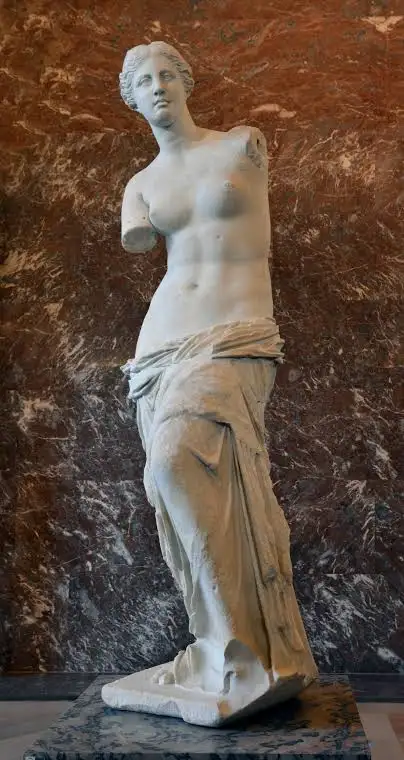
Following its transformation from a medieval fortress, the Louvre began its journey towards becoming a palace of arts, notably during the Renaissance. The Salle des Caryatides, commissioned by King Henry II in the mid-16th century, stands as a prime example of this shift. This magnificent ballroom features a balcony supported by four monumental, beautifully draped female figures, meticulously carved by Jean Goujon. These "caryatids" were directly inspired by the classical Greek Erechtheion on the Acropolis of Athens, showcasing a renewed appreciation for ancient artistry. Further illustrating France's cultural ambition is the story of the Venus de Milo. Discovered in 1820, this iconic statue became central to a sophisticated French propaganda campaign. After Napoleon's defeat forced the return of the plundered Medici Venus, the French government aggressively promoted their new acquisition as the superior, original Greek masterpiece, cementing France's claim to cultural dominance on the world stage.
Pharaohs, Scribes, and Ancient Laws: Unveiling Antiquity
The Sully Wing also serves as a profound gateway to the ancient world, housing one of the largest Egyptian collections outside of Cairo. Your journey begins by crossing the threshold into the Crypt of the Sphinx, a solemn entryway established by Jean-François Champollion, the very man who deciphered the Rosetta Stone. Here, you'll encounter the majestic Great Sphinx of Tanis, dating back to 2600 BC. Observe closely how later pharaohs, like Ramses II, boldly usurped power by carving their own names over the original builders' cartouches. Witness the incredibly preserved Mastaba of Akhethotep, a tomb chapel from Saqqara rebuilt within the museum, showcasing vivid daily life scenes. Marvel at the startling realism of The Seated Scribe from 2500 BC, with his lifelike rock crystal eyes, and the exquisite gold-inlaid bronze of the Statue of Karomama, a testament to ancient Egyptian metallurgy. Finally, transition to Mesopotamia to encounter the Code of Hammurabi, a 1750 BC stele outlining 282 laws, setting the legal precedent of "an eye for an eye," with King Hammurabi receiving laws from the Sun God.
Ready to Explore Paris?
Download the Paris Smart Guide now and transform your travel experience
Follow these stops in the Paris Smart Guide mobile app with offline GPS & interactive AI.
1
The Sully Pavilion
📍 Sully Wing Entrance.
Welcome to the oldest heart of the Louvre, tracing its origins back 800 years.
2
The Medieval Moat
📍 Sully Wing, Lower Ground Floor.
Walking through the excavated 12th-century defensive walls of King Philip Augustus.
3
The Keep (Donjon)
📍 Sully Wing, Lower Ground Floor.
The exact center of the original fortress and the heart of medieval Parisian defense.
4
The Salle des Caryatides
📍 Sully Wing, Ground Floor, Room 348.
The Renaissance ballroom supported by four massive pillars carved as women.
5
Venus de Milo (Deep Dive)
📍 Sully Wing, Ground Floor, Room 345.
The cutthroat 19th-century French propaganda campaign to declare her the greatest statue in the world.
6
The Crypt of the Sphinx
📍 Sully Wing, Lower Ground Floor, Room 338.
Crossing the threshold into the dark, mysterious realm of the pharaohs.
7
The Great Sphinx of Tanis (Deep Dive)
📍 Sully Wing, Ground Floor, Room 338.
Decoding the hieroglyphs and the usurped names carved into the granite.
8
The Mastaba of Akhethotep
📍 Sully Wing, Ground Floor, Room 334.
An incredibly preserved, intact Old Kingdom tomb chapel reassembled inside the museum.
9
The Seated Scribe
📍 Sully Wing, 1st Floor, Room 635.
The startling, lifelike realism of a non-royal Egyptian bureaucrat from 2500 BC.
10
Statue of Karomama
📍 Sully Wing, 1st Floor, Room 643.
The exquisite, gold-inlaid bronze priestess showing the peak of Egyptian metallurgy.
11
The Mummy Man
📍 Sully Wing, 1st Floor, Room 632.
The grim, fascinating process of mummification and the Egyptian concept of the afterlife.
12
The Code of Hammurabi
📍 Richelieu Wing, Ground Floor, Room 227 (Near East Antiquities).
Leaving Egypt for Mesopotamia to read the world's oldest pillar of ancient law.
Frequently Asked Questions
What is the significance of the Louvre's Sully Wing?
The Sully Wing is considered the oldest part of the Louvre, tracing its origins back 800 years as a medieval fortress and later housing significant ancient collections, particularly from Egypt and Mesopotamia.
Can I see the original medieval walls at the Louvre?
Yes, in the Sully Wing, you can walk through the excavated medieval moat and see the foundations of the 12th-century Donjon (Keep) built by King Philip Augustus.
What ancient Egyptian masterpieces are in the Sully Wing?
The Sully Wing features the Great Sphinx of Tanis, the reconstructed Mastaba of Akhethotep, the incredibly lifelike Seated Scribe, and the exquisitely crafted Statue of Karomama, among others.
How does the audio guide enhance my visit to the Sully Wing?
The audio guide provides deep historical context for each major stop, from decoding hieroglyphs on the Great Sphinx of Tanis to understanding the propaganda behind the Venus de Milo, making your self-guided exploration immersive and informative.