Journey Through Masterpieces: Unveiling the Louvre's Denon Wing

Journey Through Masterpieces: Unveiling the Louvre's Denon Wing

Step into the heart of human emotion and imperial ambition within the Louvre's magnificent Denon Wing. This is where colossal canvases tell tales of triumph and tragedy, where ancient myths breathe new life into marble, and where the echoes of history's grandest moments resonate. Prepare to discover the untold stories behind masterpieces that have shaped Western art and challenged the very limits of human expression, all at your own pace.

🎧 20-Second Audio Guide Preview

“Welcome to the Denon Wing. Look closely at the monumental scale. Feel the weight of history in this grand gallery. Stand before masterpieces of human emotion and imperial ambition. From Michelangelo's raw power to Canova's tender kiss. Uncover secrets of masterpieces, like how a goddess made of marble seems to defy the wind itself. What stories will these walls whisper to you?”

The Power of Stone: From Slaves to Goddesses

Enter the Denon Wing and immediately confront Michelangelo's profound philosophical statement in stone: the 'Dying Slave' and 'Rebellious Slave'. Sculpted between 1513 and 1516 for Pope Julius II's tomb, these figures embody the artist's belief that a finished sculpture was simply a soul 'freed' from within the marble block. Nearby, experience the exquisite Neoclassical mastery of Antonio Canova’s 'Psyche Revived by Cupid’s Kiss' from 1793. This breathtaking work captures the precise moment of awakening, showcasing marble so exquisitely smooth it appears alive. Notice the complex, interlocking X-shape of their embracing forms and wings. This wing further houses the iconic 'Winged Victory of Samothrace', a 190 BC marvel whose Hellenistic carver made solid marble appear like sheer, wet fabric clinging to the goddess against a strong wind.

Revolution, Empire, and Grand Architecture

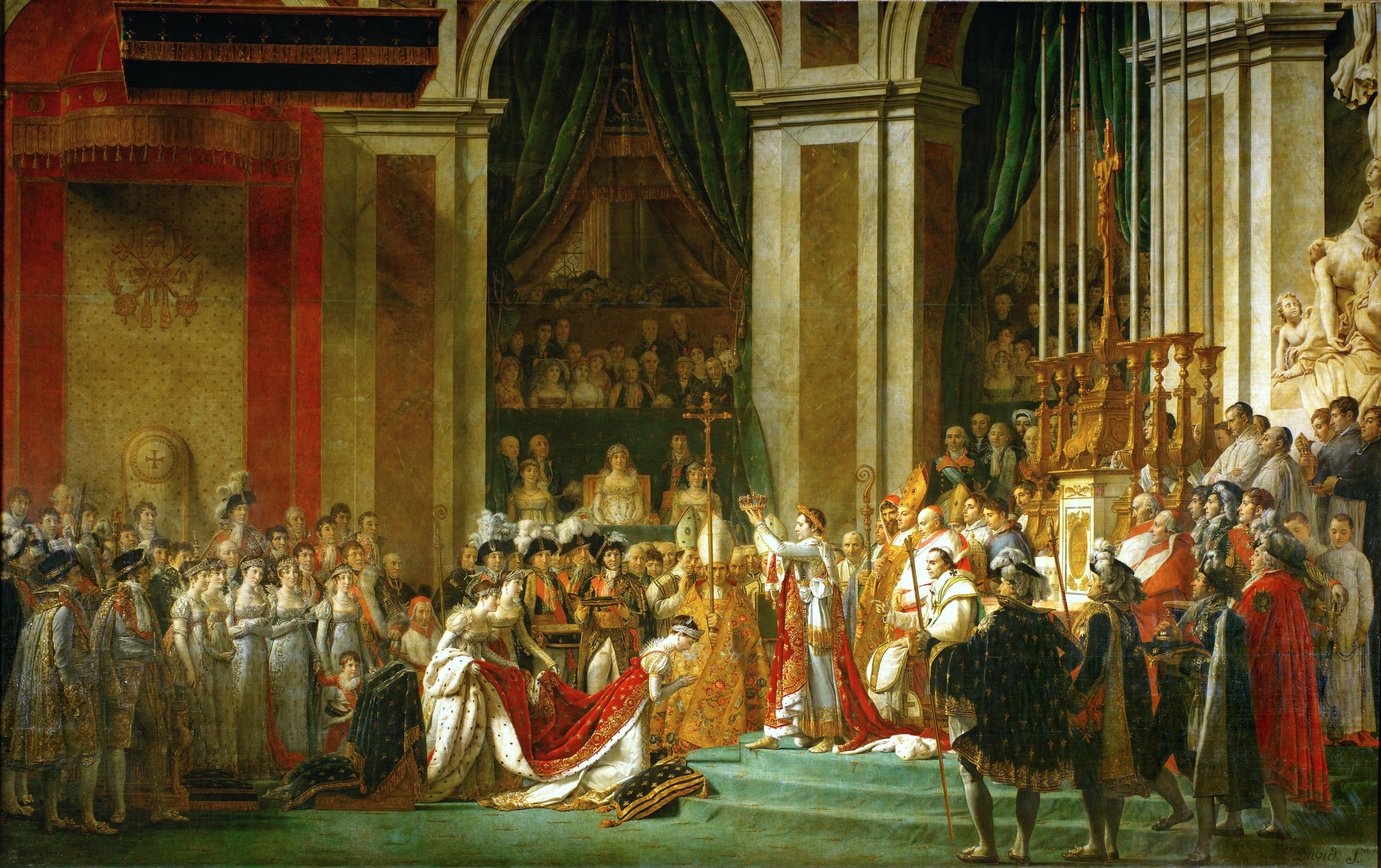
Ascend the magnificent Daru Staircase, a 19th-century architectural masterpiece designed by Hector Lefuel. Its theatrical grandeur prepares you for the artistic treasures ahead, specifically framing the breathtaking Winged Victory of Samothrace at its summit. Immerse yourself in the charged atmosphere surrounding Jacques-Louis David's 'The Oath of the Horatii', painted in 1784. This foundational Neoclassical work, depicting three Roman brothers swearing allegiance to their city and abandoning weeping women, became a potent visual symbol foreshadowing the French Revolution. Then, stand before the monumental, 32-foot-wide 'Coronation of Napoleon' from 1807, another of David’s epic works. Decode this piece of imperial propaganda, where Napoleon notably crowned himself, asserting his supreme authority even over the Pope. David was famously compelled to include Napoleon’s mother, despite her boycott of the actual event, highlighting the political pressures of the commission.

Da Vinci's Genius and Romanticism's Dark Side

Walk through the awe-inspiring Grande Galerie, initiated by King Henry IV in 1595. This quarter-mile long, naturally lit hall, once connecting the Louvre to the Tuileries Palace, was built to showcase the finest Italian Renaissance works, providing the perfect setting for Leonardo da Vinci's masterpieces. Witness 'Virgin of the Rocks', painted in 1483, revealing da Vinci's fascination with geology and botany. Observe the dramatic contrast between the harsh, cavernous background and the soft, 'sfumato' faces. Nearby, gaze upon the enigmatic 'Mona Lisa'. While respected, her global celebrity truly ignited after her theft in 1911 by an Italian handyman, Vincenzo Peruggia, who hid her for two years. Continue to Théodore Géricault’s 'The Raft of the Medusa' (1819), a chilling depiction rooted in Géricault’s morbid research, including interviews with survivors and studying decaying flesh. Finally, confront Eugène Delacroix’s 'Death of Sardanapalus' (1827), a wildly controversial, chaotic, and vivid Romantic work depicting an Assyrian king's violent final act.


Paris Smart Guide

Ready to Explore Paris?

Download the Paris Smart Guide now and transform your travel experience

✨ Explore All App Features

Tour Route & Historical Stops (12)

Follow these stops in the Paris Smart Guide mobile app with offline GPS & interactive AI.

1

The Denon Entrance

📍 Denon Wing Ground Floor entrance.

Welcome to the grand gallery of human emotion and imperial ambition.

2

Michelangelo’s Slaves

📍 Denon Wing, Ground Floor, Room 403.

The "Dying" and "Rebellious" slaves, and the artist's philosophy of freeing figures from stone.

3

Psyche Revived by Cupid's Kiss

📍 Denon Wing, Ground Floor, Room 403.

Canova's breathtaking Neoclassical marble masterpiece of love and mythology.

4

The Daru Staircase

📍 Denon Wing, Escalier Daru.

The architectural grandeur of the ascent toward the Louvre's most prized wing.

5

Winged Victory of Samothrace (Deep Dive)

📍 Denon Wing, Daru Staircase.

Analyzing the incredible drapery and the naval battle it was carved to commemorate.

6

The Oath of the Horatii

📍 Denon Wing, 1st Floor, Room 702.

Jacques-Louis David’s stark, geometric call to civic duty and bloodshed.

7

The Coronation of Napoleon

📍 Denon Wing, 1st Floor, Room 702.

Decoding the monumental, 32-foot-wide piece of imperial propaganda.

8

The Grande Galerie

📍 Denon Wing, 1st Floor, Room 710.

The architectural marvel of the endless, skylit hall built by King Henry IV.

9

Virgin of the Rocks

📍 Denon Wing, 1st Floor, Room 710.

Leonardo da Vinci's mastery of sfumato and mysterious, rocky landscapes.

10

The Mona Lisa (Deep Dive)

📍 Denon Wing, 1st Floor, Room 711.

Beyond the smile: the 1911 theft that made her famous, and the science of her preservation.

11

The Raft of the Medusa

📍 Denon Wing, 1st Floor, Room 700.

A deep dive into Géricault's morbid research and the political scandal of the shipwreck.

12

Death of Sardanapalus

📍 Denon Wing, 1st Floor, Room 700.

Delacroix's chaotic, violent climax of Romanticism depicting an Assyrian king's fiery end.

Frequently Asked Questions

What are the must-see artworks in the Denon Wing?

The Denon Wing is home to iconic pieces such as the Winged Victory of Samothrace, Leonardo da Vinci's Mona Lisa, Théodore Géricault's The Raft of the Medusa, and Jacques-Louis David's The Coronation of Napoleon.

What is the historical significance of The Raft of the Medusa?

Théodore Géricault's 1819 masterpiece, The Raft of the Medusa, depicts a real-life shipwreck and political scandal. Géricault's meticulous, morbid research, including interviewing survivors and studying cadavers, aimed for brutal accuracy.

How did the Mona Lisa become so famous?

While always respected, the Mona Lisa's global celebrity status skyrocketed after its theft in 1911 by Vincenzo Peruggia, an Italian handyman. The ensuing two-year media frenzy and recovery propelled it into unparalleled worldwide fame.

Can this audio guide enhance my visit to the Denon Wing?

Absolutely. This audio guide provides deep historical insights, artistic analysis, and fascinating stories for each masterpiece, transforming your viewing experience into an immersive journey through the Denon Wing's triumph and tragedy.

Paris Smart Guide
★★★★★ 4.8 • FREE APP • OFFLINE GPS
Hear Paris's Hidden Stories
Your Personal Audio Guide • 10 Languages
🎧 Download