Walk the Gilded Halls of Absolute Power: A Versailles Audio Journey
Imagine yourself amidst the splendor of 17th-century France, where the Sun King, Louis XIV, reigned supreme. This audio tour invites you to journey through the Palace of Versailles, uncovering the secrets of royal power, breathtaking artistry, and the daily rituals of the French monarchy that shaped European history. Prepare to be immersed in an era of unparalleled grandeur.
🎧 20-Second Audio Guide Preview
“Stand before the Royal Gate. Step into Louis XIV's world. Look up at the Hercules Room's overwhelming ceiling. Notice the intricate details of the Royal Chapel, reflecting divine power. Walk the Hall of Mirrors, where 357 reflections once flaunted French supremacy. Can you feel the weight of history?”
The Divine Right: Power from Above
Begin your journey at the Royal Gate, the very entrance to the Sun King's world. Our first stop, the Royal Chapel, completed in 1710, stands as a profound illustration of the 'Divine Right of Kings.' Its unique two-story design allowed the monarch to sit on the upper level, positioned directly beneath God, while the entire court remained physically beneath both King and heavens. Moving into the early 18th-century Hercules Room, prepare to be overwhelmed. Its massive, unbroken painted ceiling, depicting the apotheosis of Hercules, served to immediately impress and prepare guests for the formal reception rooms ahead with its sheer scale and vibrant color.
Opulence, Entertainment, and War in the King's State Apartments
Within the King's State Apartments, life revolved around lavish display. The Abundance Salon, an antechamber during Louis XIV's evening gatherings, was a hub of luxury. Here, favored nobles enjoyed exotic coffee, wines, and liqueurs, showcasing France's vast global trade. Nearby, the Venus and Diana Salons served as vibrant game rooms, where Louis XIV indulged in billiards, then a newly fashionable and expensive pastime. These rooms also proudly displayed Bernini's famous, highly flattering marble bust of the King. However, the grandeur of the Apollo Salon, originally draped in crimson velvet with spectacular solid silver furniture, reveals a darker truth. Designed by Charles Le Brun, its magnificent silver throne and furnishings were tragically melted down in 1689 to fund Louis XIV's devastating European wars. This contrast between splendor and sacrifice culminates in the War Room, a heavy transition space from 1678. Its focal point is a massive oval stucco relief, depicting a triumphant Louis XIV trampling his enemies on horseback, a powerful symbol of France's military dominance.
The Hall of Mirrors: A Dazzling Display of Power and Royal Legacy
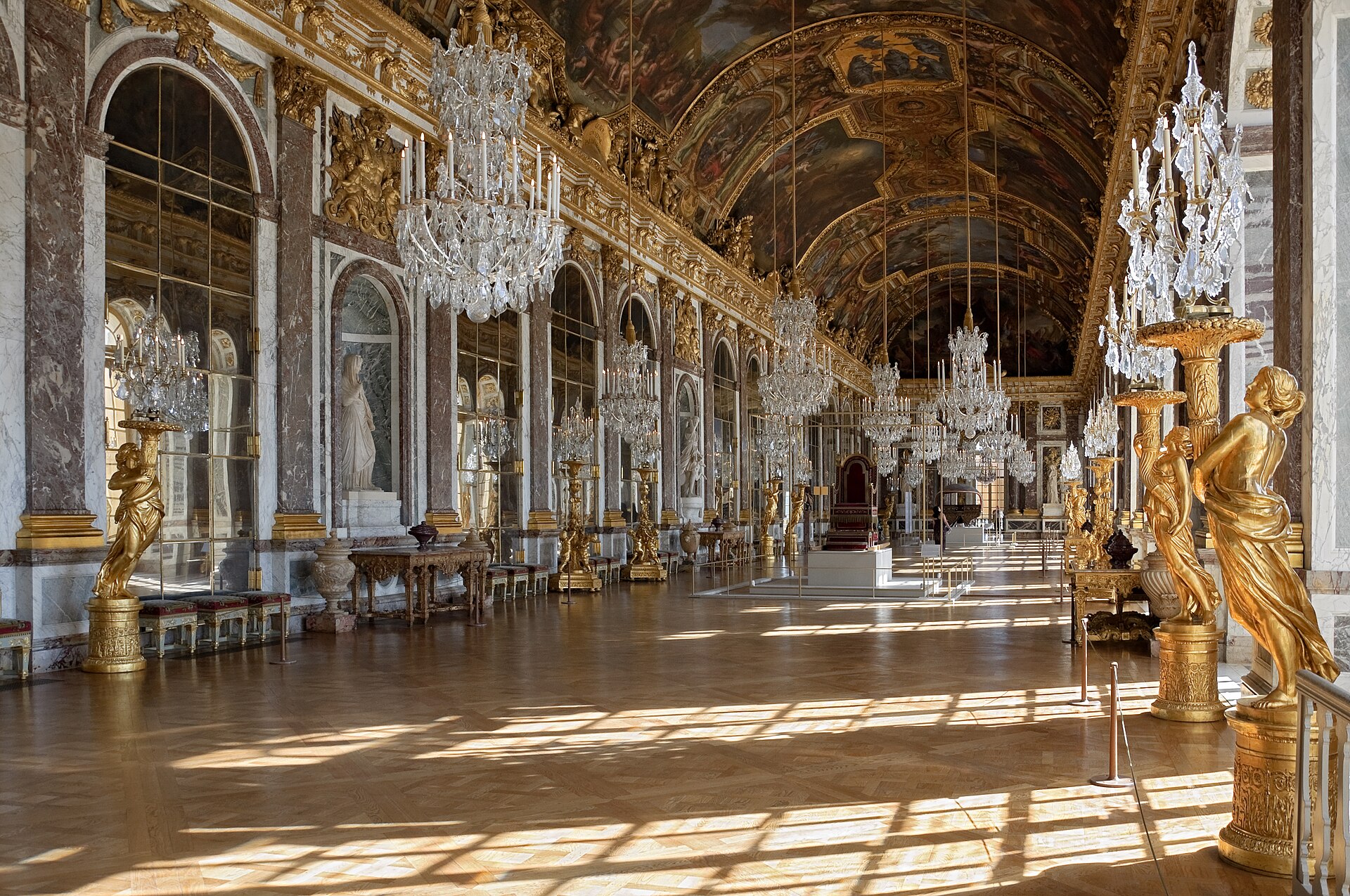
The pinnacle of Versailles's grandeur is undoubtedly the Hall of Mirrors. Completed by Jules Hardouin-Mansart in 1684, this breathtaking gallery features 357 mirrors positioned precisely opposite 17 massive arched windows overlooking the gardens. In the 17th century, mirrors were extraordinarily expensive, and this room was a bold declaration of French glassmaking supremacy, proving they had surpassed Venice's monopoly. Symmetrical to the War Room, the Peace Room concludes the Hall of Mirrors, its decorations shifting from military conquest to the arts, marking the entrance into the Queen's State Apartments. Here, the Queen's Bedchamber was a stage for intense public theater; Queens of France were compelled to give birth in public, surrounded by dozens of courtiers, to quell rumors of switched or illegitimate heirs. The journey ends in the monumental Gallery of Great Battles, a 19th-century addition by King Louis-Philippe. Stretching 120 meters, this hall is filled with 33 monumental paintings detailing 1,400 years of French military triumphs, serving as a permanent testament to 'all the glories of France.'
FAQs about the Palace of Versailles & Audio Tour
Here are answers to common questions about visiting Versailles and its historical significance with our audio guide.
FAQs about the Palace of Versailles & Audio Tour
Here are answers to common questions about visiting Versailles and its historical significance with our audio guide.
Ready to Explore Paris?
Download the Paris Smart Guide now and transform your travel experience
Follow these stops in the Paris Smart Guide mobile app with offline GPS & interactive AI.
1
The Royal Gate (Entrance)
📍 Main Entrance Gates / Cour d'Honneur.
Welcome to the center of the 17th-century world.
2
The Royal Chapel
📍 Palace Interior, Upper Vestibule.
The stunning, two-story white and gold chapel illustrating the "Divine Right of Kings" (the monarch answers only to God).
3
The Hercules Room
📍 King's State Apartments, Room 1.
The transition from the public palace to the King's State Apartments, featuring a massive, unbroken painted ceiling.
4
The Abundance Salon
📍 King's State Apartments, Room 2.
The antechamber used for evening soirées, where coffee, wines, and exotic liqueurs were served to favored nobles.
5
The Venus & Diana Salons
📍 King's State Apartments, Rooms 3 & 4.
The game rooms. Where Louis XIV played billiards (a newly fashionable game) and housed his famous marble bust by Bernini.
6
The Apollo Salon
📍 King's State Apartments, Room 6.
The original Throne Room of the Sun King, draped in crimson velvet and heavy silver furniture that was later melted down.
7
The War Room
📍 King's State Apartments, Room 7 (Corner).
The architectural crescendo leading into the grand gallery, featuring a massive stucco relief of Louis XIV trampling his enemies on horseback.
8
The Hall of Mirrors
📍 The Grand Gallery.
The climax. 357 mirrors set opposite 17 massive arched windows. The ultimate display of French glassmaking supremacy and political power.
9
The Peace Room
📍 Queen's State Apartments, Corner Room.
Symmetrical to the War Room, bringing the Hall of Mirrors to a close and transitioning into the domain of the Queen.
10
The Queen's Bedchamber
📍 Queen's State Apartments.
The opulent, heavily floral room where royal heirs were born completely in public to prevent rumors of switched babies.
11
The Nobles' Room
📍 Queen's State Apartments, Antechamber.
The formal audience chamber where the Queen held her daily public circle, presenting newly arrived nobles to the court.
12
The Gallery of Great Battles
📍 South Wing, First Floor.
A massive 19th-century addition by King Louis-Philippe, stretching 120 meters and filled with 33 paintings detailing French military triumphs.
Frequently Asked Questions
Why is the Royal Chapel at Versailles designed with two stories?
The Royal Chapel's two-story design physically illustrated the 'Divine Right of Kings.' The monarch sat on the upper level, symbolically communicating directly with God, while the court occupied the ground level, physically beneath both the King and the heavens.
What was the original purpose of the Hall of Mirrors?
The Hall of Mirrors, completed in 1684, was built to showcase France's burgeoning glassmaking industry. With 357 mirrors, it was a grand display proving that French glassmakers had usurped Venice's monopoly on mirror production, a significant economic and political statement.
Why did Louis XIV melt down his magnificent silver furniture?
In 1689, Louis XIV tragically had to melt down his massive solid silver furniture, including a spectacular silver throne from the Apollo Salon, to finance his devastating European wars. It was a costly sacrifice to fund the monarchy's military ambitions.
Why were French Queens required to give birth in public at Versailles?
Queens of France were forced to give birth completely in public, surrounded by dozens of courtiers in the Queen's Bedchamber. This extreme public theater was a measure to prevent any rumors of switched babies or illegitimate heirs to the throne.