The Spark of Rebellion: Challenging Academic Art
The Impressionist Revolution at Musée d'Orsay began with a deliberate defiance of the established art world. Before you, understand the 'enemy': Alexandre Cabanel's 'The Birth of Venus' (1863), an academic ideal purchased by Emperor Napoleon III. Its invisible brushstrokes and flawless mythological nudity represented everything Impressionists sought to dismantle. Then, Édouard Manet ignited controversy with 'Le Déjeuner sur l'herbe' (1863), shocking Paris with a modern naked woman staring directly from the canvas, amidst clothed men. Manet pushed further with 'Olympia' (1863), depicting an unashamed high-class Parisian prostitute. Her confrontational gaze and the painting's harsh lighting and flat application were a direct assault on the smooth, academic style, challenging viewers to confront reality over idealized fantasy.
Capturing Modern Parisian Life
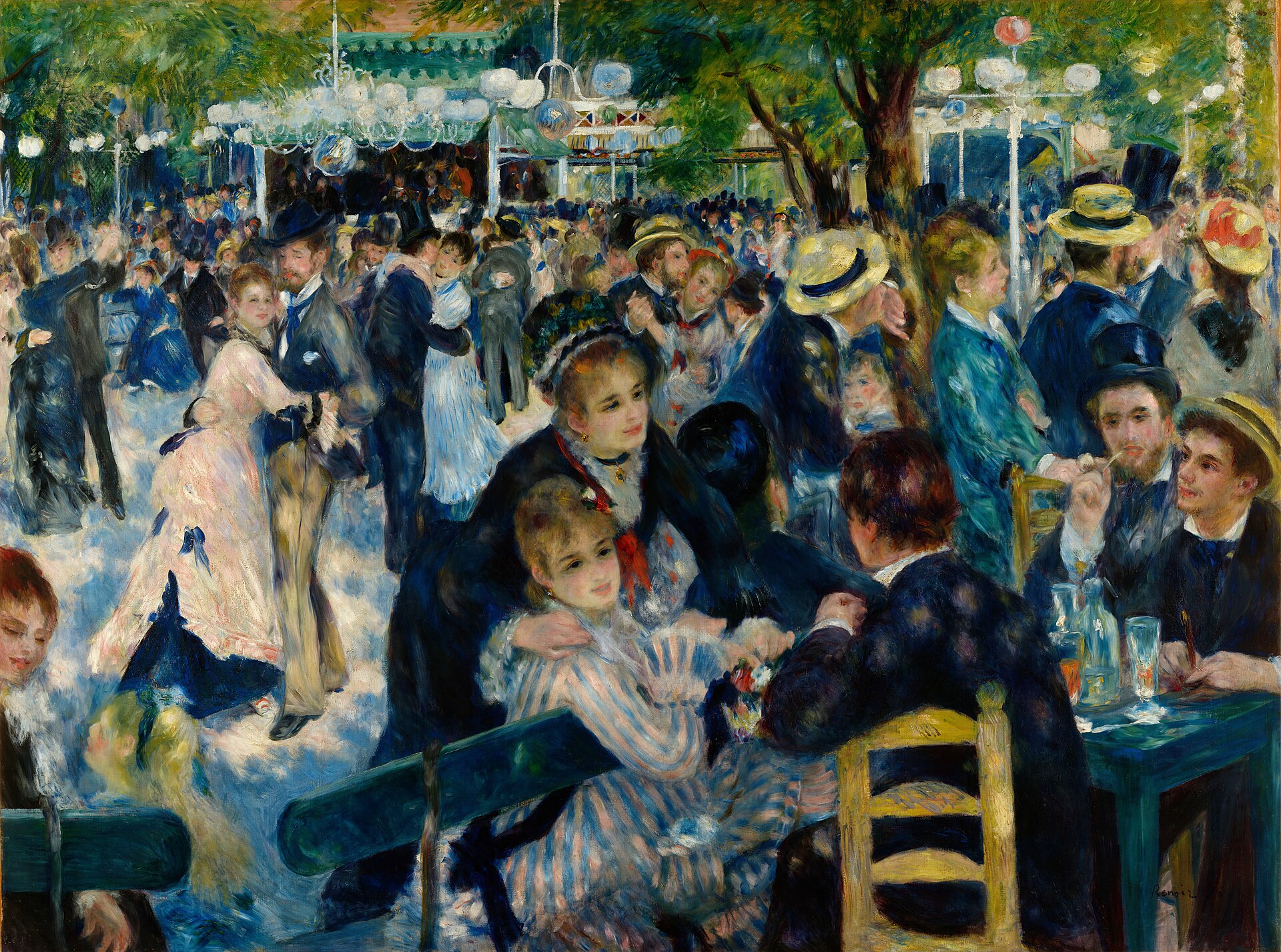
As the revolution progressed, artists turned their gaze to the dynamic pulse of modern Paris. Gustave Caillebotte's 'The Floor Scrapers' (1875) exemplifies this shift, masterfully capturing the strenuous labor of working-class men within a grand Haussmann apartment. Its striking perspective brought gritty, urban reality into high art. Pierre-Auguste Renoir's 'Bal du moulin de la Galette' (1876) then transports you to a joyous Montmartre Sunday, where dappled sunlight dances through acacia trees onto lively Parisians. This masterpiece celebrates bohemian leisure, movement, and the fleeting effects of light. Claude Monet, ever the innovator, turned to industry with 'The Gare Saint-Lazare' (1877), capturing the atmospheric steam and light within the modern railway station, demonstrating art's new engagement with the contemporary world.
From Emotion to Abstraction: The Evolving Canvas
The Impressionist and Post-Impressionist journey at Orsay culminated in radical explorations of form, emotion, and perception. Edgar Degas challenged sculptural norms with 'The Little Fourteen-Year-Old Dancer' (1881), a wax figure adorned with real hair, a fabric tutu, and silk ribbons. Her unidealized realism initially provoked critics, showcasing a raw, modern truth. Vincent van Gogh poured emotional intensity onto his canvases, evident in 'Starry Night Over the Rhône' (1888), capturing the vibrant contrast of gaslight against the night sky, and his 1889 'Self-Portrait,' revealing a fragile psychological state through swirling, thick impasto. Finally, Claude Monet’s 'Blue Water Lilies' (post-1914) marks a profound evolution. As his cataracts blurred his vision, he abandoned traditional landscapes, focusing purely on water's surface, pushing Impressionism to the very edge of 20th-century abstract expressionism.