Unveiling Notre-Dame's Architectural Brilliance
Step inside the Grand Nave and immediately feel the awe-inspiring scale of its 12th-13th century ribbed vaults. The post-2019 fire restorations have brought the original bright stone colors back to life, profoundly changing the interior atmosphere and revealing the true grandeur of medieval craftsmanship. Walk around the cathedral's exterior to admire the magnificent flying buttresses. These 12th-13th century stone arches form a spectacular exoskeleton, ingeniously preventing the immense weight of the heavy lead and timber roof from pushing the high stone walls outward. Without this pioneering gothic engineering, the monumental structure would simply collapse, showcasing a brilliant solution to an age-old architectural challenge.
Artistry in Stone: Divine Light and Judgment
The western facade of Notre-Dame served as a colossal 'Bible in stone,' designed to convey sacred narratives to the largely illiterate medieval populace. Above the central door, the awe-inspiring Portal of the Last Judgment vividly depicts souls being weighed on a scale by the Archangel Michael, determining their eternal fate in heaven or hell. Inside, the three magnificent 13th-century Rose Windows are true masterpieces. These glowing mandalas of radiant stained glass were intricately crafted by medieval artisans to symbolically represent the divine light of God filtering into the earthly realm, creating an ethereal atmosphere that still captivates visitors today with their intricate beauty and spiritual resonance.
From Royal Decrees to a Grand 21st-Century Rebirth
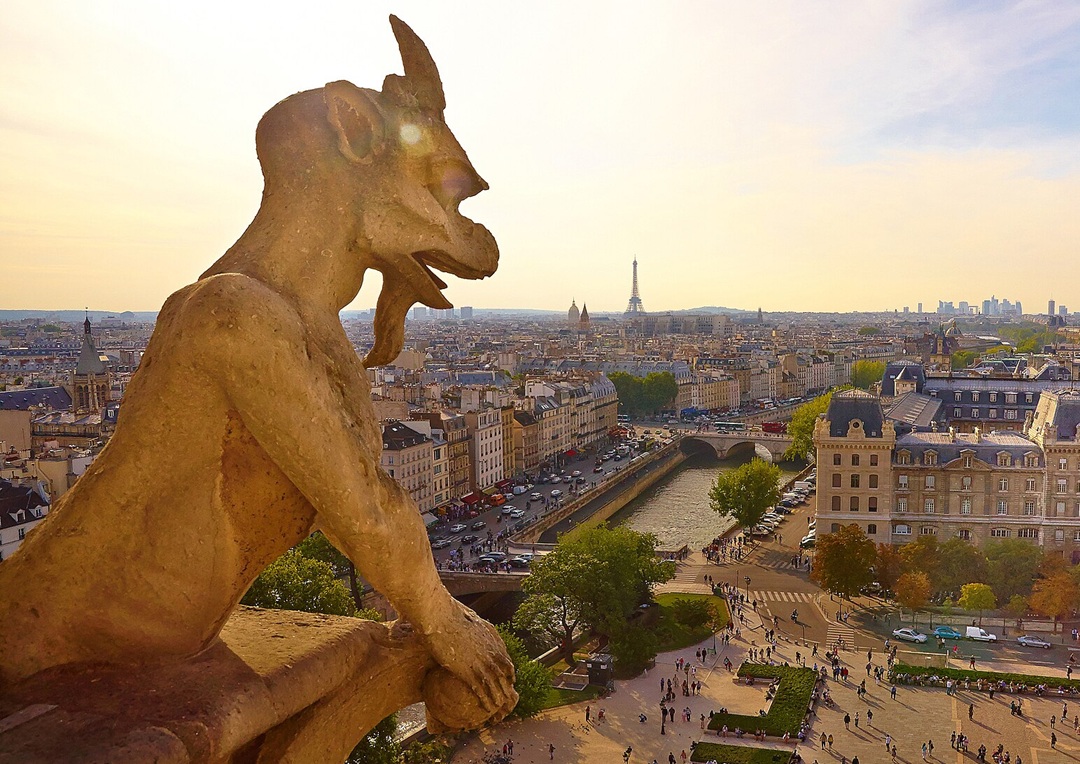
The cathedral's interior underwent significant transformation in the 18th century, notably due to the Vow of Louis XIII. This royal promise forever altered the choir's decorations, dedicating France to the Virgin Mary, a testament to the monarchy's enduring influence on sacred spaces. More recently, the Transept bears witness to an incredible modern timber-framing effort, meticulously reconstructing Eugène Viollet-le-Duc’s iconic 19th-century spire, completed in 2024, exactly as it was. High above, the famous gargoyles and chimeras, including the brooding Stryge, were largely additions from Viollet-le-Duc’s 19th-century restoration, born from romanticism and Victor Hugo’s powerful novel, adding a dramatic, mythical dimension to the cathedral’s exterior.