Defy Convention: Unearth the Rebels of Post-Impressionism at Musée d'Orsay
Step into the radical world of Post-Impressionism at the Musée d'Orsay, where artists like Cézanne, Seurat, and Gauguin shattered artistic norms. This era, born from a desire for more structure and emotion than the Impressionists offered, saw painters embrace bold new techniques, challenge societal views, and redefine the very essence of art. Prepare to journey through masterpieces that paved the way for modernism.
🎧 20-Second Audio Guide Preview
“Look closely at Cézanne's Apples, defying traditional perspective. Notice how Seurat's Circus uses millions of dots to trick your eye. Stand before Gauguin's vibrant 'Arearea,' a rejection of the West. Feel Van Gogh's turmoil in 'The Church at Auvers.' And witness Rodin's 'Gates of Hell.' What artistic rules did these rebels break?”
Cézanne and Seurat: Redefining Form and Light
Paul Cézanne, a pivotal figure in Post-Impressionism, sought to "astonish Paris with an apple" by deconstructing traditional perspective. In works like "Apples and Oranges," he dramatically tilted the tabletop, presenting fruit from multiple geometric angles simultaneously, a revolutionary approach that directly foreshadowed Cubism. His "The Card Players," painted between 1894 and 1895, depicts local farmhands with monumental, almost stone-like volume, a stark contrast to Impressionist fleeting moments. Georges Seurat, another innovator, embraced a scientific approach. His 1891 masterpiece, "The Circus," rejects traditional brushstrokes, instead employing millions of tiny, unblended contrasting dots. This technique, known as Pointillism, forces the viewer's brain to optically mix colors from a distance, creating a vibrant, luminous effect based on scientific theory.
Gauguin and Van Gogh: A Quest for Deeper Meaning
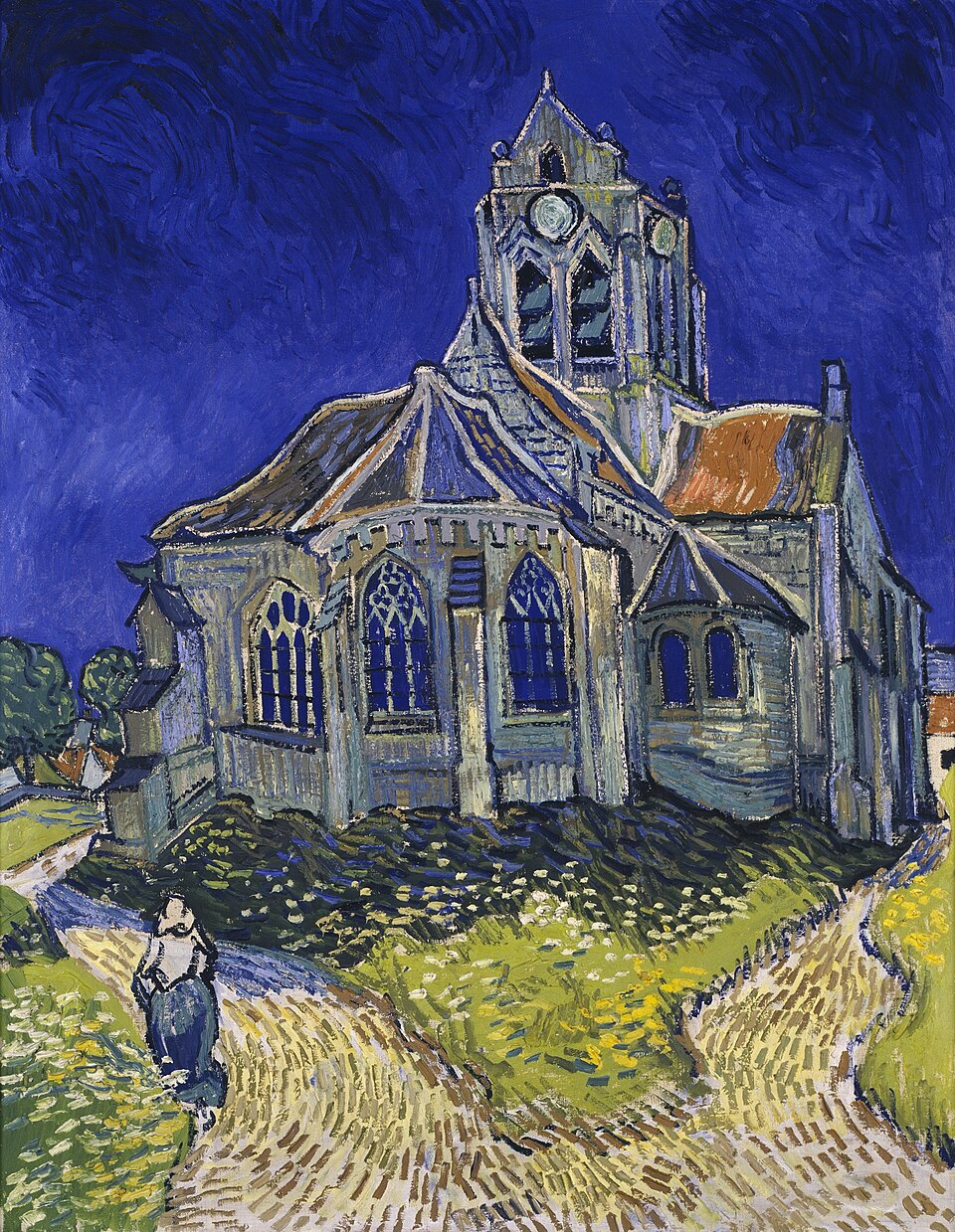
Paul Gauguin, disillusioned with industrial Paris, fled to Tahiti in search of a "primitive" untouched life. His 1892 painting "Arearea" exemplifies his "Synthetism" style, using flat, bold, and deliberately unnatural colors, like the bright red dog, to convey spiritual emotion rather than visual reality. This rejection of mimetic representation profoundly influenced the nascent Nabis movement, as seen in Paul Sérusier's "The Talisman" (1888), a tiny, nearly abstract landscape painted under Gauguin's direct instruction, proving art's essence lies in pure emotion. Vincent van Gogh's "The Church at Auvers," painted weeks before his tragic suicide in 1890, reveals intense psychological turmoil. The church appears alive and unstable, its twisting architecture and heavy cobalt sky reflecting Van Gogh's profound emotional detachment and fractured relationship with religion.
Lautrec and Rodin: Capturing Life's Raw Edge
Henri de Toulouse-Lautrec plunged into the vibrant, sometimes seedy, nightlife of Montmartre, immortalizing its characters. His 1892 work "Jane Avril Dancing" showcases his signature style: bold, flat silhouettes and dynamic framing, heavily influenced by Japanese woodblock prints. Lautrec elevated commercial poster advertising into high art, turning ephemeral cabaret advertisements into timeless modern masterpieces. Across the museum, Auguste Rodin pushed the boundaries of sculpture. His 1877 "The Age of Bronze" was so anatomically perfect that critics controversially accused him of "surmoulage"—casting directly from a living model. Rodin had to provide photographic evidence to prove his manual sculpting skill. His magnum opus, "The Gates of Hell" (1880–1917), originally commissioned for a decorative arts museum, became an obsessive 37-year project, teeming with over 200 tormented figures, including the iconic, albeit tiny, original version of "The Thinker."
Ready to Explore Paris?
Download the Paris Smart Guide now and transform your travel experience
Follow these stops in the Paris Smart Guide mobile app with offline GPS & interactive AI.
1
Level 5 Gallery Entrance
📍 Level 5, Post-Impressionist Gallery Entrance.
Welcome to the Post-Impressionist era. The Impressionists won, but the next generation thought their art lacked structure and emotion.
2
Apples and Oranges
📍 Level 5, Room 36.
Deconstructing perspective. How Cézanne flattened space and laid the geometric groundwork for Cubism.
3
The Card Players
📍 Level 5, Room 36.
Analyzing the psychological stillness and the architectural, monumental volume given to simple peasants.
4
The Circus
📍 Level 5, Room 43.
The science of Pointillism. How Seurat used optical mixing—placing millions of contrasting colored dots side-by-side—to trick the eye.
5
Arearea
📍 Level 5, Room 44.
The rejection of Western civilization. Gauguin's flight to Tahiti and his use of "Synthetism" (flat, bold, unnatural colors).
6
The Talisman
📍 Level 2 (Middle Level), Room 72.
The birth of the Nabis movement. A tiny painting on a cigar box lid that proved art should be pure emotion, not a copy of reality.
7
The Church at Auvers
📍 Level 2 (Middle Level), Room 71.
Distorted reality. How the twisting, melting architecture reflects the artist's intense psychological turmoil.
8
Jane Avril Dancing
📍 Level 5, Room 42.
The gritty, neon-lit nightlife of Montmartre and the elevation of commercial poster advertising to high art.
9
The Age of Bronze
📍 Level 2 (Middle Level), Rodin Terrace.
The sculpture so startlingly realistic that critics falsely accused Rodin of casting it from a live human body.
10
The Gates of Hell
📍 Level 2 (Middle Level), Rodin Terrace.
The dark, writhing, unfinished masterpiece of modern sculpture that gave birth to "The Thinker."
Frequently Asked Questions
What defines the Post-Impressionist era at Musée d'Orsay?
It's defined by artists who, while influenced by Impressionism, sought more structure, emotion, and symbolic meaning. They explored diverse techniques like Cézanne's geometric flattening, Seurat's Pointillism, and Gauguin's Synthetism, laying groundwork for modern art movements.
How did Cézanne influence future art movements?
Cézanne's revolutionary approach to perspective, seen in works like "Apples and Oranges," where he presented objects from multiple angles simultaneously, directly paved the way for the Cubist movement, particularly influencing Picasso.
What's the story behind Rodin's "The Age of Bronze" sculpture?
When "The Age of Bronze" was exhibited in 1877, its startling anatomical realism led critics to falsely accuse Rodin of casting it from a live model (surmoulage). Rodin had to publicly defend himself with photographs to prove he sculpted it by hand.
How does the audio guide enhance my visit to "The Rebels of Art" tour?
The audio guide provides deep historical context and fascinating insights into each masterpiece, detailing the scandalous techniques, societal shifts, and personal stories of artists like Cézanne, Seurat, and Van Gogh, transforming your museum experience into an immersive journey.