Walk Paris' Triumphal Way: From Eiffel's Marvel to Seine's Charm
Step into the grandeur of 19th-century Paris, where World's Fairs transformed the landscape. Our audio guide invites you to explore the magnificent Trocadéro, witness the architectural marvel of the Eiffel Tower, and stroll along the historic Seine. Discover a route steeped in imperial history, engineering genius, and captivating Parisian charm, all at your own pace.
🎧 20-Second Audio Guide Preview
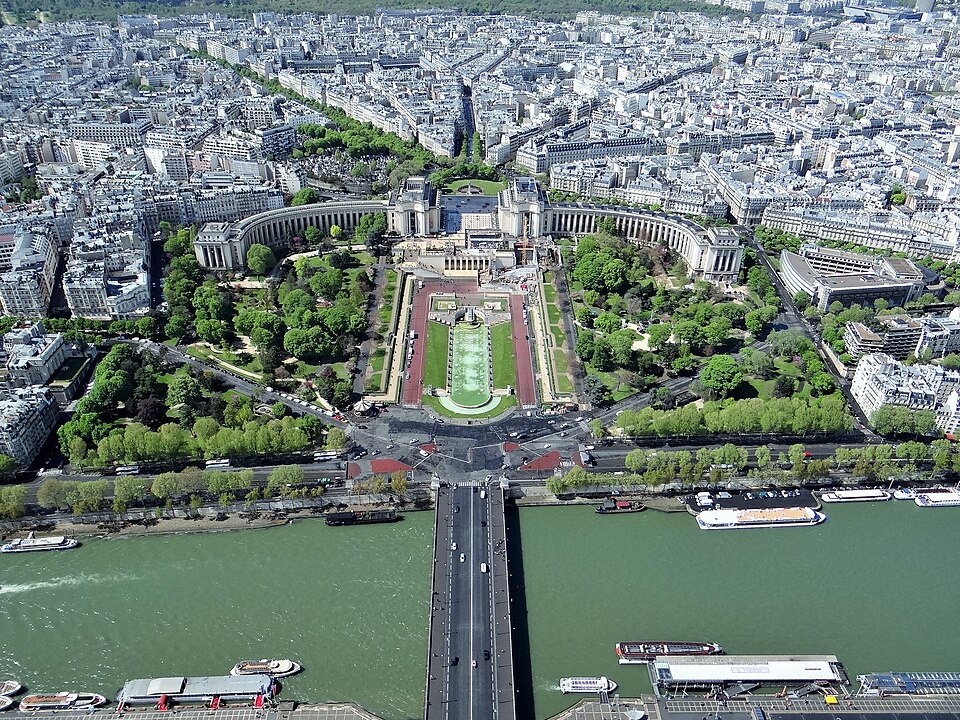
“Stand at the Palais de Chaillot. Notice how its curved wings frame the Eiffel Tower perfectly. Look at the Trocadéro Fountains; water cannons arc 50 meters, a dynamic foreground. Walk Pont d'Iéna, commissioned by Napoleon. See the vintage carousel. Now, stand at the Iron Lady's base. Can you feel its controversial past?”
🗺️ Interactive Walking Route Map
Tap any numbered stop pin to preview its location & walking directions
The Grand Stage: Palais de Chaillot and Trocadéro's Design
Your journey begins at the magnificent Palais de Chaillot, an architectural masterpiece built for the 1937 World's Fair. This Neoclassical structure famously replaced an older Moorish-style palace, with its sweeping curved wings meticulously designed to act as a theatrical frame, drawing the eye directly to the Eiffel Tower across the Seine. Below, the Trocadéro Fountains, also dating from 1937, complete this iconic vista. Known as the Warsaw Fountains, their massive central basin features 20 powerful water cannons, shooting dynamic arcs 50 meters across the plaza, creating a spectacular foreground that leads your gaze straight to the tower's legendary iron legs. This plaza undeniably remains the world's most famous photo spot.
Beneath the Iron Lady: Engineering, Controversy, and Charm
As you approach the Pont d'Iéna, commissioned by Napoleon Bonaparte in 1807 to commemorate his victory at the Battle of Jena, observe the massive stone eagles adorning its structure. Decades after its construction, this imperial bridge became the crucial pedestrian artery feeding millions into the 1889 World's Fair. Right at the bridge's base, discover the enchanting Eiffel Carousel, a classic Belle Époque design. Its vintage wooden horses, sparkling lights, and melodic calliope music offer a nostalgic, romantic contrast to the imposing, industrial steel of the Eiffel Tower looming directly above. Standing beneath the tower's colossal 10,000-ton base reveals its shocking origins: a temporary exhibit, initially slated for demolition after just 20 years, violently despised by Parisian art elites who called it a 'tragic street lamp,' yet it became France's ultimate symbol.
From Military Fields to Modern Peace: Echoes of History
Continue your exploration into the Champ de Mars, once an 18th-century drilling ground for the French army, named after the Roman god of war. Here, the modern Wall for Peace, erected in 2000 and inspired by Jerusalem’s Wailing Wall, stands inscribed with 'Peace' in 49 languages, transforming this historical 'Field of War' into a beacon of global unity. Nearby, the grand École Militaire, founded by King Louis XV in 1750, trained young nobles to be officers, famously including a young Napoleon Bonaparte who graduated in 1785. Further along, the Musée du Quai Branly, opened in 2006, showcases indigenous art, distinguished by its striking 200-meter-long 'green wall' of living plants. Conclude at Pont de l'Alma, historically known for its Zouave soldier statue, used by Parisians to measure Seine floods, and now an unofficial memorial to Princess Diana, whose tragic accident occurred in the tunnel beneath.
Ready to Explore Paris?
Download the Paris Smart Guide now and transform your travel experience
Conclude by walking the UNESCO-protected riverbanks and the historic docks of the Bateaux Mouches.
Frequently Asked Questions
What is the historical significance of the Palais de Chaillot?
The Palais de Chaillot was built for the 1937 World's Fair, replacing an older palace. Its Neoclassical curved wings were specifically designed to frame the Eiffel Tower, making it one of the most famous viewpoints in Paris.
How long has the Eiffel Tower been a symbol of Paris?
The Eiffel Tower was built for the 1889 World's Fair as a temporary exhibit and was initially planned to be torn down after 20 years. Despite initial controversy, it quickly became an enduring symbol of France and Paris.
What unique features can I see on the Pont d'Iéna?
The Pont d'Iéna, commissioned by Napoleon Bonaparte in 1807, features massive stone eagles and imperial eagles, commemorating his victory at the Battle of Jena. It later served as the main pedestrian artery for the 1889 World's Fair.
Can I use the audio guide offline for this tour?
Yes, our audio guide app allows you to download the full tour content, including maps and audio narration, so you can enjoy your historical journey through Paris without needing an internet connection.