Uncover Le Marais: Paris's Golden Age Mansions & Aristocratic Secrets

Uncover Le Marais: Paris's Golden Age Mansions & Aristocratic Secrets

Imagine Paris untouched by revolution and modern design. Le Marais, a labyrinth of medieval streets, uniquely preserves the grandeur of 17th-century French nobility. Here, spectacular private palaces, known as Hôtels Particuliers, stand as testaments to an era of opulence and hidden lives. Prepare to peel back centuries of history with our audio guide, revealing the secrets behind every magnificent facade and tranquil courtyard.

🎧 20-Second Audio Guide Preview

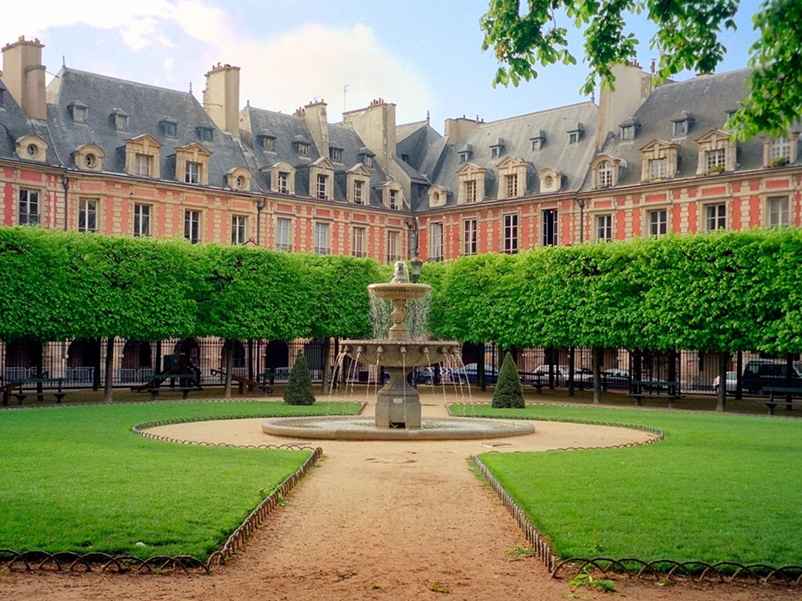
“Stand before the Hôtel de Sully, a masterpiece built in 1624. Look closely at its classic Louis XIII architecture. Notice how its massive inner courtyard isolated the elite from the bustling streets. Now, imagine walking just moments away into the breathtaking symmetry of Place des Vosges. Commissioned in 1605, it became Paris's most fashionable address. What stories do these red brick pavilions hold?”

🗺️ Interactive Walking Route Map
Tap any numbered stop pin to preview its location & walking directions
... km
~... steps
Navigation

The Aristocratic Sanctuary: Hôtels Particuliers

Enter the world of the 17th-century Parisian elite, where the 'Hôtel Particulier' reigned supreme as a symbol of status and seclusion. The magnificent Hôtel de Sully, built in 1624, is a quintessential example of this architectural marvel, showcasing the Louis XIII style. These grand townhouses were meticulously designed with a crucial feature: a massive inner courtyard that served as a physical buffer, isolating the aristocratic inhabitants from the noise, chaos, and less desirable elements of the crowded city streets. This design principle allowed the wealthy to create their own private sanctuaries, fostering an exclusive lifestyle while remaining within the heart of Paris. Our audio guide unveils the secrets of these hidden gems, illustrating how the nobility crafted their opulent bubbles.

Place des Vosges: A Revolutionary Urban Vision

Stroll into the breathtaking Place des Vosges, a truly revolutionary urban planning concept commissioned by King Henri IV in 1605. This iconic square broke new ground, mandating that all 36 surrounding pavilions be constructed to an exact, symmetrical design, characterized by their striking red brick facades and steep blue slate roofs. This uniform elegance immediately transformed it into the most fashionable and sought-after address for the 17th-century French nobility. More than just a square, it was a statement – a perfectly harmonized space in a city still largely defined by medieval irregularities. Our tour reveals how this architectural vision influenced Parisian urban design for centuries to come, laying the groundwork for future grand projects.

From Literary Genius to Modern Art: Le Marais' Evolving Legacy

Le Marais is a district where history and culture intertwine, showcasing an evolving legacy. At 6 Place des Vosges, step into the lavish, Gothic-inspired apartment where France’s greatest romantic writer, Victor Hugo, lived from 1832 to 1848. It was within these deeply personalized interiors, adorned with his own designs and Chinese porcelain, that he penned significant portions of his enduring masterpiece, 'Les Misérables.' Just a short distance away, the magnificent Hôtel Salé, built in 1656, also tells a story of transformation. Originally home to a salt tax collector, its grand central staircase now provides a stunning backdrop for the world's largest public collection of Pablo Picasso's artwork, a testament to Le Marais' journey from aristocratic power to a vibrant cultural hub.


Paris Smart Guide

Ready to Explore Paris?

Download the Paris Smart Guide now and transform your travel experience

✨ Explore All Paris Audio Guides

Tour Route & Historical Stops (10)

Follow these stops in the Paris Smart Guide mobile app with offline GPS & interactive AI.

1

The Aristocratic Heart (Intro)

🧭 Navigation

Welcome to Le Marais, preserving the narrow medieval streets and spectacular 17th-century private palaces of the French nobility.

2

Hôtel de Sully

🧭 Navigation

Describe the quintessential Parisian private palace, designed to isolate the wealthy elite from the crowded streets.

3

Victor Hugo's House

🧭 Navigation

Step into the lavish, Gothic-inspired apartment where France’s greatest romantic writer penned 'Les Misérables.'

4

Place des Vosges

🧭 Navigation

Analyze the breathtaking symmetry and red brick pavilions of the oldest planned square in Paris.

5

Musée Carnavalet

🧭 Navigation

Discuss the architectural transition from the Middle Ages to the Renaissance in this spectacular mansion.

6

Hôtel Salé

🧭 Navigation

Explore the grandest 17th-century mansion, famously known as the 'Salted House,' now housing the Picasso Museum.

7

The National Archives

🧭 Navigation

Marvel at the sweeping colonnaded courtyard of the Hôtel de Soubise, saved from the Revolution.

8

Village Saint-Paul

🧭 Navigation

Wander through the hidden, interconnected aristocratic courtyards and antique galleries.

9

Hôtel d'Aumont

🧭 Navigation

Examine the classic French formal garden tucked behind a noble facade, designed by André Le Nôtre.

10

Hôtel de Ville

🧭 Navigation

Conclude at the monumental City Hall, rebuilt on a colossal scale to project the power of the French Republic.

Frequently Asked Questions

What historical period does the Le Marais audio tour primarily cover?

The audio tour primarily focuses on the 17th century, the "Golden Age" of Le Marais, showcasing the private palaces built by French nobility, along with insights into medieval origins and later transformations.

Can I visit Victor Hugo's house and the Picasso Museum with this audio guide?

Yes, the audio guide includes stops for both Victor Hugo's House (Maison de Victor Hugo) and the Hôtel Salé, which now houses the Picasso Museum, providing historical context for both locations.

What makes Le Marais unique compared to other Paris districts?

Le Marais is unique because it largely survived Haussmann's 19th-century renovations, preserving its narrow medieval street plan and a high concentration of magnificent 17th-century Hôtels Particuliers (private mansions).

Is the audio tour suitable for all visitors, including those interested in gardens?

Yes, the audio tour is designed for all visitors interested in history and architecture. It also features a stop at the Hôtel d'Aumont, highlighting its classic French formal garden designed by André Le Nôtre.

Paris Smart Guide
★★★★★ 4.8 • FREE APP • OFFLINE GPS
Hear Paris's Hidden Stories
Your Personal Audio Guide • 10 Languages
🎧 Download