The Pletzl: Unveiling a Millennium of Jewish Paris in Le Marais
Step into Le Marais's historic Pletzl, the vibrant heart of Jewish Paris. For a thousand years, this quarter has witnessed profound stories of culture, resilience, and survival, primarily along the winding Rue des Rosiers. From ancient origins to modern vitality, prepare to uncover layers of history woven into every cobblestone, echoing a community's enduring spirit against all odds.
🎧 20-Second Audio Guide Preview
“Stand before the striking Rue Pavée Synagogue. Look closely at its undulating Art Nouveau facade, a testament to Hector Guimard's genius. Notice how it contrasts with the ancient energy of Rue des Rosiers, a sanctuary for centuries of Jewish life. What hidden stories do these walls whisper?”
🗺️ Interactive Walking Route Map
Tap any numbered stop pin to preview its location & walking directions
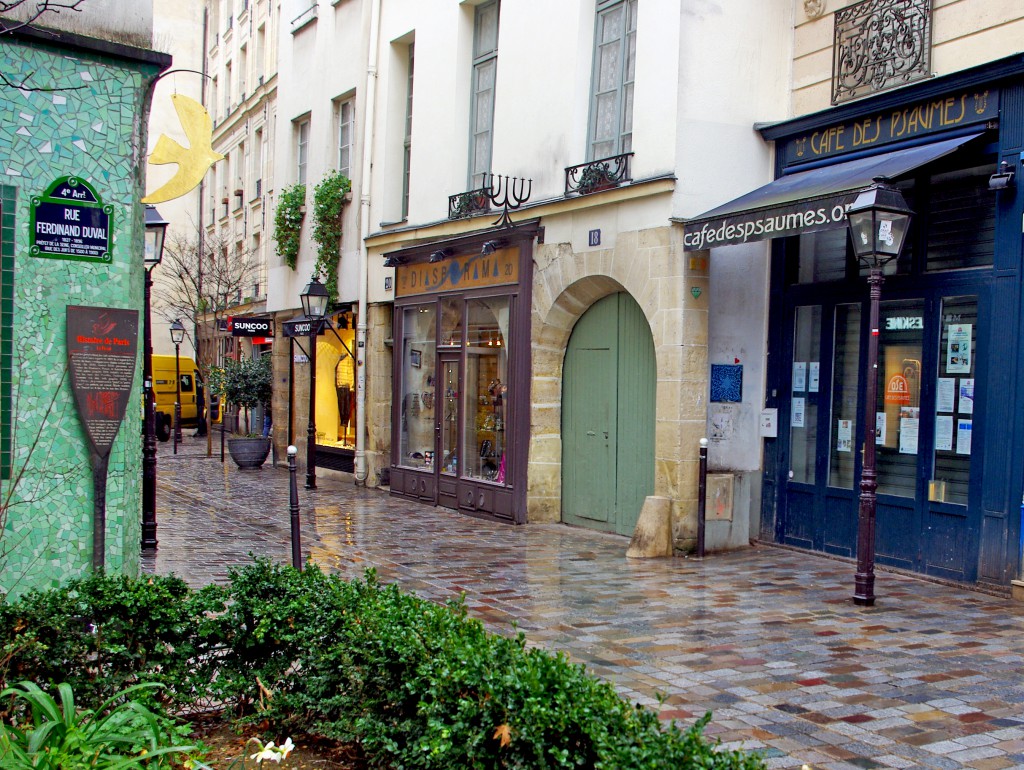
Begin your journey at the remarkable Rue Pavée Synagogue, a masterpiece by Hector Guimard, the visionary architect behind Paris’s iconic Metro entrances. Built in 1913 for Eastern European orthodox immigrants, its organic, undulating Art Nouveau facade is a stark reminder of resilience, having been meticulously rebuilt after being dynamited by Nazi collaborators in 1941. Just nearby, Rue Ferdinand Duval carries a more subtle yet profound history; renamed in 1936, it was once simply 'Rue des Juifs.' This controversial decision sought integration but also erased centuries of Jewish identity from the map. Together, these streets narrate a complex story of architectural innovation and a community's struggle to maintain its presence and heritage.
Tragedy, Remembrance, and Quiet Heroes
The Pletzl's enduring spirit is inextricably linked to its tragic past, profoundly marked at the École des Hospitalières-Saint-Gervais. A somber plaque here commemorates the 165 Jewish children arrested from this very school in July 1942 during the Vel' d'Hiv Roundup, later deported to Auschwitz. This harrowing moment is powerfully echoed at the Memorial de la Shoah, France’s epicenter of Holocaust remembrance, where the Wall of Names bears witness to 76,000 Jewish men, women, and children deported from France. Amidst this profound sorrow, the serene Jardin des Rosiers offers a quiet space for reflection, named in honor of Joseph Migneret, a local principal who bravely hid Jewish children, earning him the title 'Righteous Among the Nations.' His courage represents a beacon of humanity during humanity's darkest hour.
A Living Legacy: Flavors and Modern Art
Experience the Pletzl's vibrant contemporary life through its renowned culinary scene. The iconic L'As du Fallafel and neighboring Jewish bakeries are more than mere eateries; they symbolize the rich cultural fusion of Middle Eastern, North African, and Eastern European Jewish diasporas. The constant queues are a modern testament to the neighborhood's enduring vitality. Juxtaposing this deep history, the Pletzl's walls burst with dynamic street art, reflecting a community that honors its past while embracing a trendy, avant-garde future. Conclude your journey at the mahJ (Musée d'art et d'histoire du Judaïsme), housed in a magnificent 17th-century mansion, offering a monumental celebration of Jewish art, culture, and theology, perfectly bridging tradition and modernity.
Ready to Explore Paris?
Download the Paris Smart Guide now and transform your travel experience
Conclude at the spectacular 17th-century mansion dedicated to Jewish art and history.
Frequently Asked Questions
What is the significance of the Pletzl in Paris?
The Pletzl, meaning "little square" in Yiddish, is the historic Jewish Quarter of Le Marais. It has served as a sanctuary and cultural heart for Jewish communities in Paris for over a thousand years, particularly along Rue des Rosiers.
Is the Rue Pavée Synagogue open to visitors?
The Rue Pavée Synagogue is an active place of worship. While its exterior is a stunning example of Art Nouveau architecture by Hector Guimard, internal visits are typically restricted to worshippers or by special arrangement.
What happened at the École des Hospitalières-Saint-Gervais?
In July 1942, during WWII, French police arrested 165 Jewish children from this school as part of the Vel' d'Hiv Roundup. They were subsequently deported to Auschwitz and murdered, a tragic event commemorated by a plaque.
How can an audio guide enhance my visit to the Pletzl?
An audio guide provides deep historical context and personal narratives at each significant stop, from the Guimard Synagogue to the Shoah Memorial. It allows you to explore at your own pace, uncovering hidden stories and cultural insights that bring the Pletzl's rich history to life.