










From Grand Railway Hub to Artistic Sanctuary: The Untold Story of Musée d'Orsay

From Grand Railway Hub to Artistic Sanctuary: The Untold Story of Musée d'Orsay

Step back to 1900, as Paris, host of the Universal Exhibition, unveiled a marvel of modern engineering disguised as classical beauty. The Gare d'Orsay, a monumental railway station, embodied the city's ambition. Designed to harmonize with the Louvre, it subtly concealed its industrial might. This Beaux-Arts masterpiece, now the Musée d'Orsay, stands as a testament to ingenuity, luxury, and a dramatic battle for preservation. Prepare to uncover its hidden architectural wonders.

🎧 20-Second Audio Guide Preview

“Stand before the grand facade of Musée d'Orsay. This elegant Beaux-Arts building was once a bustling train station. Look closely: can you spot the subtle clues to the 12,000 tons of iron hidden beneath its classical stone exterior? This was a design challenge built for the 1900 Universal Exhibition. What secrets does this magnificent structure hold?”

The Grand Deception: Beaux-Arts Façade and the Great Vault

The Musée d'Orsay began its life as the Gare d'Orsay, a magnificent railway station built for the 1900 Universal Exhibition. Architect Victor Laloux faced the monumental challenge of creating a modern industrial hub that would not clash with the classical elegance of the Louvre, situated directly across the Seine. His ingenious solution was to envelop a colossal iron structure—which, remarkably, contains more iron than the Eiffel Tower—within a stately Beaux-Arts facade of stone and ornate plaster. This grand deception extends into the interior, where the sweeping Great Vault conceals its 12,000 tons of industrial iron behind what appears to be traditional, elegant stone. It was a masterclass in blending utility with the aesthetic demands of Belle Époque Paris, setting a new standard for urban design.

The Pulse of Industry: Clocks, Luxury, and the Gilded Age

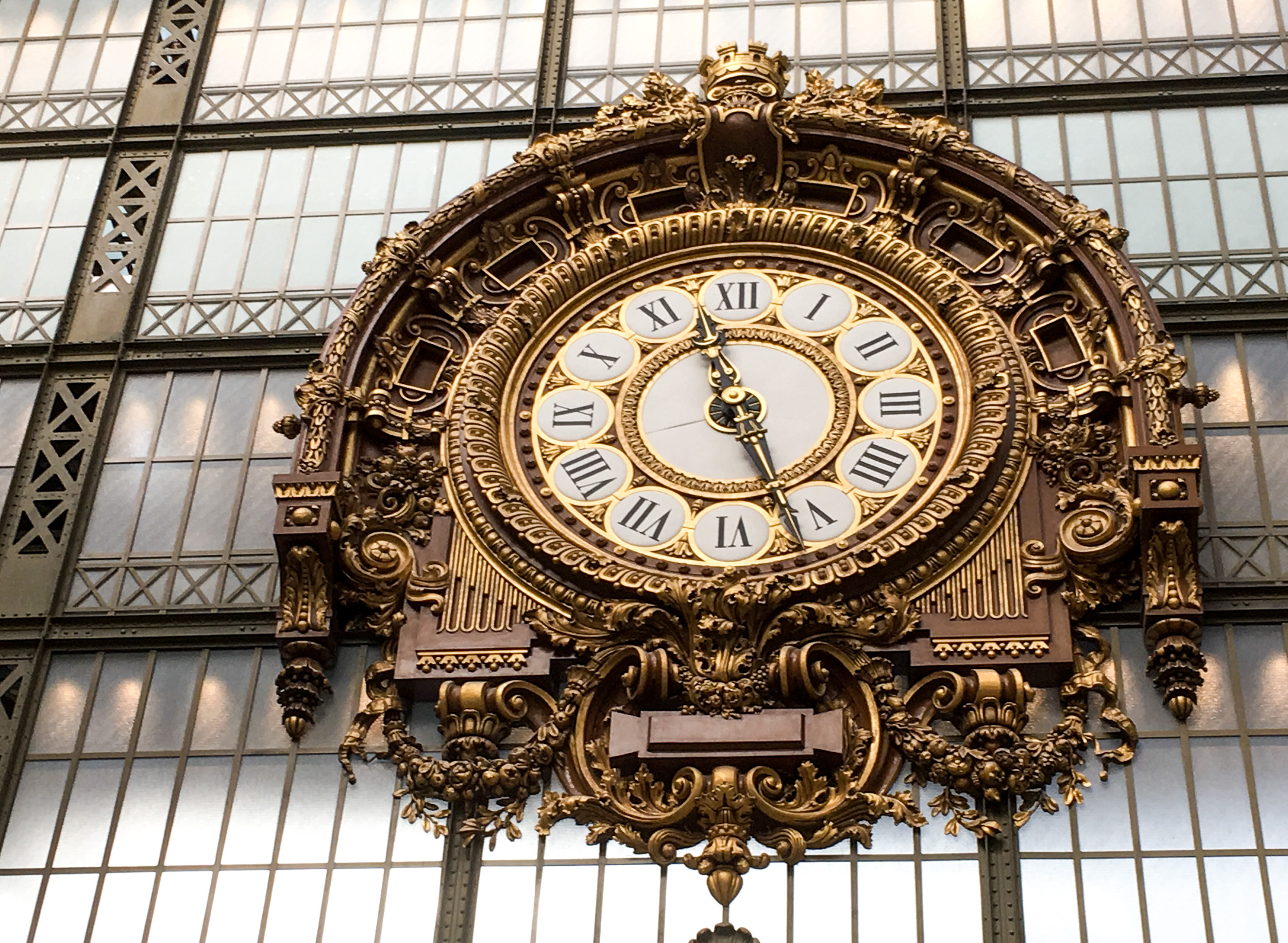
Dominating the museum's nave is the colossal, heavily gilded Golden Station Clock, a testament to the urgency of the industrial age. Designed by Victor Laloux in 1900, this monumental timepiece was not merely decorative; it symbolized the era's new reliance on standardized time, driven by rigorous railway schedules that kept electric trains and thousands of daily passengers running precisely. Beyond the tracks, the Gare d'Orsay also housed the opulent Palais d'Orsay Hotel. Its extravagant Salle des Fêtes, adorned with dazzling chandeliers, intricate gold leaf, and painted ceilings, offered high-class travelers an incredibly luxurious reception space. This celebrated dining room vividly illustrates the extravagant wealth and leisure that defined the Gilded Age traveler, offering a direct glimpse into their lavish Parisian experience upon arrival.

Hidden Engineering and a Dramatic Salvation

Look up at the vaulted ceilings to discover a marvel of 1900 Beaux-Arts engineering: the plaster rosettes. More than decoration, their dark, hollow centers functioned as a high-tech ventilation system, efficiently pulling exhaust. Yet, venture into side aisles and upper galleries, and the elegant stone illusion gives way, revealing raw, riveted steel beams—the industrial skeleton. This shift marks the historical moment when engineering began to overpower traditional masonry. Perhaps most iconic are the giant translucent clocks, serving as massive windows and grand urban timepieces overlooking the Seine. By 1939, trains outgrew the platforms, and the station was abandoned. In 1970, it was slated for demolition to build a modern hotel. A massive public outcry saved the building, leading to its brilliant repurposing as the Musée d'Orsay in 1986.

Paris Smart Guide

Ready to Explore Paris?

Download the Paris Smart Guide now and transform your travel experience

✨ Discover All App Features

Tour Route & Historical Stops (8)

Follow these stops in the Paris Smart Guide mobile app with offline GPS & interactive AI.

1

The Esplanade & Facade

📍 Exterior Plaza (Parvis).

Welcome to the Gare d'Orsay. The challenge of building a massive industrial train station that wouldn't clash with the Louvre across the river.

2

The Great Vault

📍 Ground Floor, Central Nave.

The illusion of stone. How architect Victor Laloux hid 12,000 tons of industrial iron behind elegant Beaux-Arts plaster.

3

The Golden Station Clock

📍 Ground Floor, Central Nave (facing entrance).

The urgency of the industrial age. The intricate, gilded clock that kept the trains—and Paris—running on time.

4

The Former Hotel Restaurant

📍 Level 2 (Middle Level), Room 51 (Salle des Fêtes).

The opulent, gilded dining room showing the extravagant wealth and luxury of the Gilded Age traveler.

5

The Stone Rosettes

📍 Central Nave (looking up at ceiling).

A masterclass in hidden engineering: how the beautiful floral ceiling decorations actually functioned as a high-tech ventilation system.

6

The Industrial Skeleton

📍 Ground Floor, side aisles.

Finding the exposed iron rivets and the architectural shift from traditional masonry to the age of steel and glass.

7

The Giant Translucent Clocks

📍 Level 5, Cafe Campana / Main windows.

Standing behind the massive clock faces looking out over the Seine; the mechanics of giant timepieces.

8

The Act of Salvation

📍 Level 5, observation deck.

The dramatic 1970s battle to save the abandoned, ruined station from being bulldozed for a modern hotel.

Frequently Asked Questions

What was the original purpose of the Musée d'Orsay building?

The Musée d'Orsay building was originally constructed as the Gare d'Orsay, a grand Beaux-Arts railway station, to serve visitors to the 1900 Universal Exhibition in Paris.

How was the Gare d'Orsay saved from demolition?

By 1970, the abandoned station was slated for demolition to make way for a modern hotel. A significant public outcry and advocacy led to its salvation and subsequent transformation into the Musée d'Orsay, opening in 1986.

Are there any hidden architectural secrets in the Musée d'Orsay?

Yes, many! For instance, the beautiful plaster rosettes in the vaulted ceiling are actually hidden vents for an old ventilation system, and the elegant stone facade conceals massive iron girders.

How can I best explore the architectural history of Musée d'Orsay?

Our self-guided audio tour, 'The Great Train Station,' specifically details the building's transformation, guiding you through its hidden engineering, luxurious past, and dramatic salvation as a world-class museum.

Paris Smart Guide
★★★★★ 4.8 • FREE APP • OFFLINE GPS
Hear Paris's Hidden Stories
Your Personal Audio Guide • 10 Languages
🎧 Download