Taming Nature: The Royal Gardens of Versailles Unveiled
Step into the colossal realm of the Versailles Gardens, where King Louis XIV's power is etched into every sculpted hedge and shimmering fountain. Designed by André Le Nôtre, these immense geometric landscapes are more than just beauty; they are a grand testament to human ingenuity, political theatre, and absolute dominance over nature, awaiting your exploration.
🎧 20-Second Audio Guide Preview
“Stand before Versailles. Look closely at the Grand Perspective, stretching endlessly. Notice the Latona Fountain’s dramatic warning. Hear the story of the Orangery, sheltering 1,000 exotic trees. These aren't just gardens; they are a canvas of power, engineering, and optical illusion. What secrets do these royal waters whisper?”
The Grand Perspective: An Infinite Kingdom
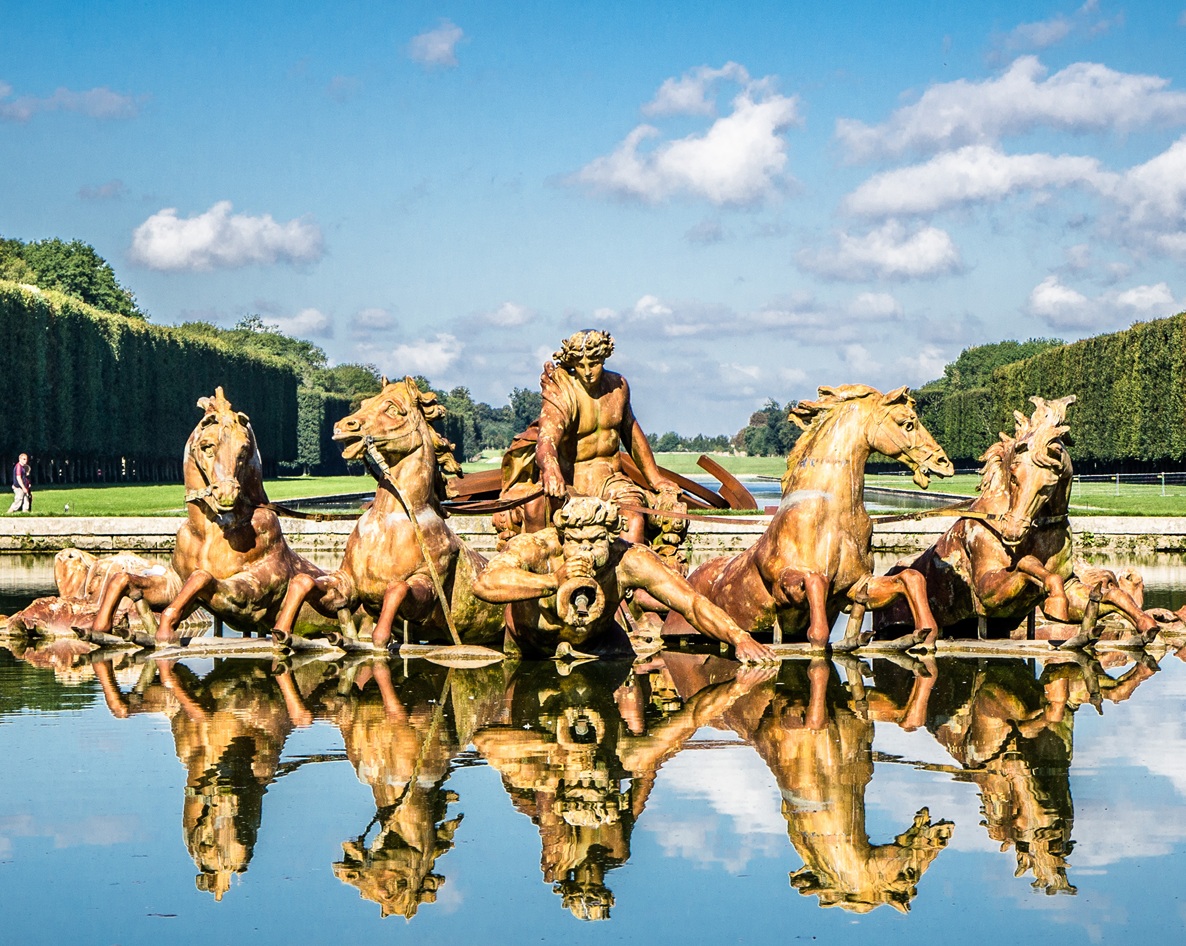
Welcome to the Water Parterre, the gateway to André Le Nôtre’s monumental geometric gardens, a landscape designed to assert absolute dominance. From here, gaze upon the Grand Perspective, a masterclass in forced perspective. This immense lawn, known as the Royal Way or Tapis Vert, is meticulously engineered to stretch the horizon artificially, subtly hiding dips and manipulating scale. The illusion makes the King's domain appear physically infinite, a subtle yet powerful declaration of his boundless reach. Further along this axis, the dramatic Apollo Fountain, depicting the Sun God bursting forth, is perfectly aligned to face the King’s bedroom, rising with the sun, symbolizing Louis XIV's divine power.
Hydraulic Wonders & Subterranean Secrets
Beyond the sweeping perspectives lie extraordinary feats of 17th-century engineering. The Orangery, an architectural marvel by Jules Hardouin-Mansart, is a massive sunken vaulted gallery built between 1684 and 1686. Its incredibly thick walls naturally maintained a stable winter temperature, miraculously preserving over 1,000 exotic citrus trees through freezing Parisian winters. Further into the estate, the Grand Canal, a 1.6-kilometer cross-shaped artificial lake, was not just for beauty. Constructed by Le Nôtre, it hosted mock naval battles, grand fireworks displays, and even genuine Venetian gondolas with imported gondoliers. The colossal Neptune Fountain, completed later by Ange-Jacques Gabriel in 1740, features 99 spectacular jets, powered by a mind-boggling underground plumbing network, pushing hydraulic limits solely for royal entertainment.
Whispers of Warning and Royal Revelry
The gardens of Versailles are replete with symbolic narratives, often serving as stark political warnings. The Latona Fountain, inspired by Ovid’s Metamorphoses, vividly depicts peasants transformed into frogs for insulting Apollo’s mother. As Louis XIV identified with Apollo, this was a clear, violent threat to any noble or commoner considering rebellion. Similarly, the Enceladus Fountain shows a giant crushed under Mount Etna, a brutal metaphor for the fate of those who betray the Crown. Yet, amidst these warnings, spaces for royal leisure abound. The Ballroom Grove, designed by Le Nôtre, is a hidden open-air amphitheater with a cascading water ramp lined with millstones and imported shells, perfect for the King’s evening dances. Jules Hardouin-Mansart’s Colonnade Grove, a circular marble peristyle, served as a highly exclusive, secret outdoor dining room, complete with musicians.
Ready to Explore Paris?
Download the Paris Smart Guide now and transform your travel experience
Follow these stops in the Paris Smart Guide mobile app with offline GPS & interactive AI.
1
The Water Parterre
📍 Gardens, directly behind the Palace.
Welcome to the world's greatest formal garden.
2
The Latona Fountain
📍 Gardens, descending the central axis.
The mythological warning to rebels: peasants who insulted the mother of Apollo are violently transformed into spitting frogs.
3
The Grand Perspective
📍 Gardens, looking down The Royal Way.
André Le Nôtre's optical illusion. How the massive lawn artificially stretches the horizon to make the King's domain look infinite.
4
The Orangery
📍 Gardens, below the South Parterre.
An architectural marvel of temperature control. A massive sunken garden built to keep 1,000 exotic citrus trees alive through harsh winters.
5
The Ballroom Grove
📍 Gardens, South side (Bosquet des Rocailles).
A hidden, outdoor amphitheater lined with millstones and imported shells, engineered specifically for royal outdoor dancing.
6
The Colonnade Grove
📍 Gardens, North side.
Architect Jules Hardouin-Mansart’s circular marble peristyle hidden deep in the woods, acting as a secret outdoor dining room.
7
The Apollo Fountain
📍 Gardens, base of The Royal Way.
The dramatic climax of the main garden axis: the Sun God rising from the water in his chariot, perfectly facing the King's bedroom.
8
The Grand Canal
📍 Gardens, extending beyond the Apollo Fountain.
The 1.6-kilometer artificial lake engineered for mock naval battles, summer boating parties, and genuine Venetian gondolas.
9
The Enceladus Fountain
📍 Gardens, North side grove.
A terrifying, gilded giant crushed under the rocks of Mount Etna. Another strict political warning to any noble thinking of betraying the King.
10
The Neptune Fountain
📍 Gardens, North edge.
The largest and most complex water theater in the gardens, featuring 99 jets that required a mind-boggling underground plumbing network.
Frequently Asked Questions
How long does it take to explore the main gardens of Versailles with the audio guide?
The primary route covering key garden features, including fountains, groves, and perspectives, typically takes between 2 to 3 hours at a leisurely pace with the audio guide, depending on how many stops you choose to explore in depth.
What is the significance of the "spitting frogs" at the Latona Fountain?
The spitting frogs at the Latona Fountain are a direct reference to Ovid's Metamorphoses, depicting peasants transformed into frogs for insulting Latona. For Louis XIV, who associated himself with Apollo (Latona's son), this served as a powerful and dramatic warning to any who dared to rebel against his authority.
Are the fountains always operating in the Versailles Gardens?
The major fountains in the Versailles Gardens operate only during specific 'Musical Fountains Shows' or 'Musical Gardens' periods, typically on weekends and some Tuesdays during the high season. It's advisable to check the official Palace of Versailles schedule before your visit for exact operating times.
How does the audio guide enhance the visit to the Versailles Gardens?
The audio guide transforms your visit by providing deep historical context, decoding the symbolism of fountains and groves, explaining the engineering marvels like optical illusions and hydraulic systems, and sharing captivating stories that bring the King's vision and the lives of those who created these gardens to life.