










Renoir's Sunlit Bohemian Celebration at the Moulin de la Galette

Renoir's Sunlit Bohemian Celebration at the Moulin de la Galette

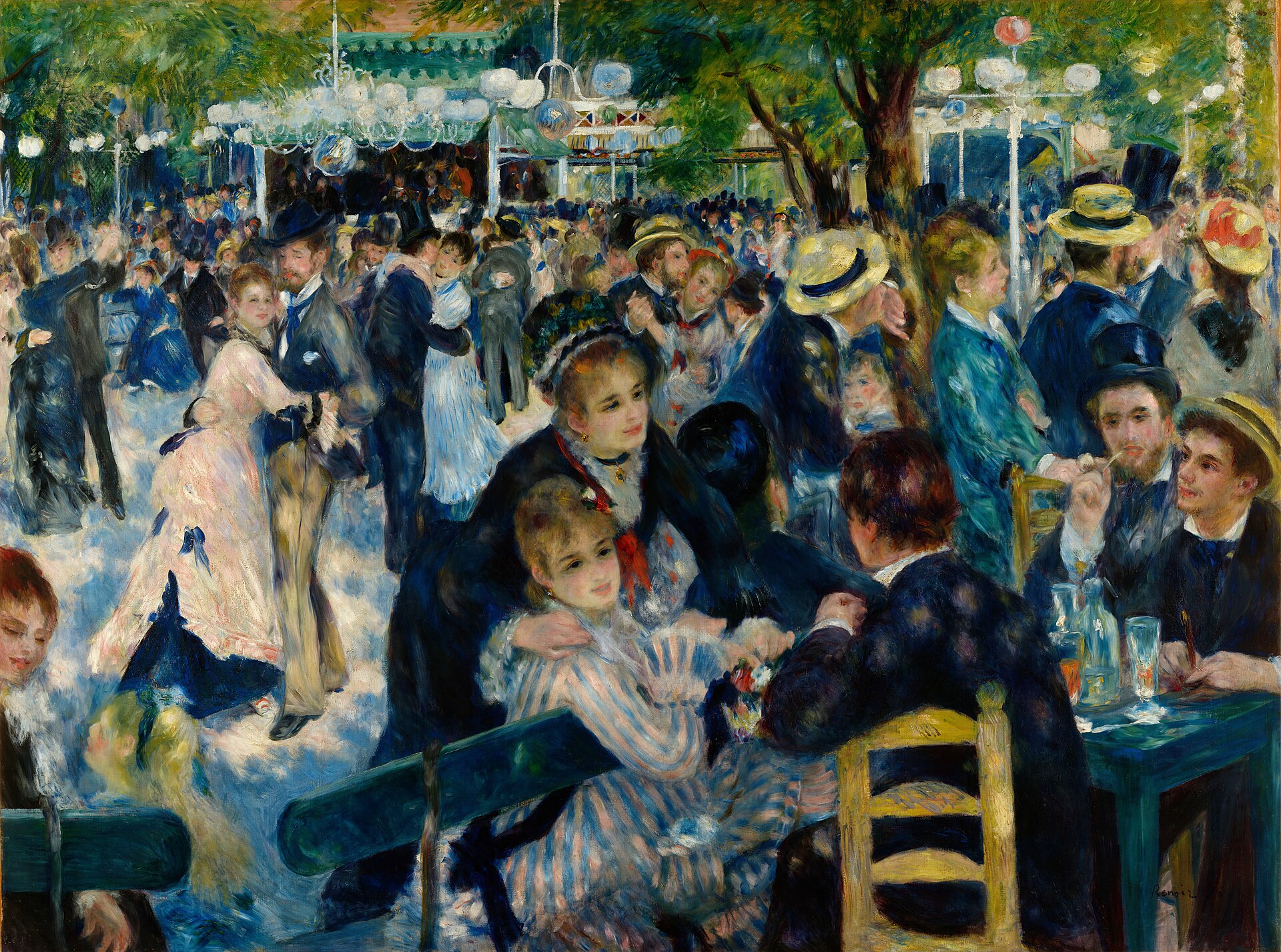
Step directly into a bustling Sunday afternoon in nineteenth-century Montmartre where working-class Parisians spin, converse, and celebrate life under a canopy of acacia trees. Painted in 1876, Pierre-Auguste Renoir's Bal du moulin de la Galette transforms an ordinary open-air dance hall into an unforgettable symphony of dappled sunlight, pastel dresses, and effortless modern joy. It remains one of the crowning triumphs of the entire Impressionist movement inside the Musee d'Orsay.

🏛️ Museum Wayfinding Level 5, Room 30.
⏳ Era & Origin
Painted in 1876 by Pierre-Auguste Renoir.
📍 Exact Gallery / Wing
Level 5, Room 30, Musee d'Orsay, Paris.
🕒 Suggested Time
10 to 15 minutes.
💡 Insider Tip
Notice the circular dappled light spots scattered across the men's dark jackets.
🎧 20-Second Audio Guide Preview

“Look closely at the dancing crowd bathed in shimmering spots of light. Notice how the sun filters through the leafy canopy, dotting dark jackets and pale striped dresses alike. Renoir carried his canvas straight up Montmartre hill to capture this buoyant gathering. But who are these vibrant revelers?”

Historical Origin, Artist and Montmartre Backstory

Pierre-Auguste Renoir painted this masterwork in 1876 during a period of intense artistic ambition. To capture the authentic spirit of contemporary Parisian life, Renoir rented a cottage with an overgrown garden on the Rue Cortot, situated just a short stroll from the Moulin de la Galette. This popular open-air dance hall and windmill tavern on the heights of Montmartre drew an eclectic mix of local artisans, seamstresses, bohemians, poets, and painters every Sunday afternoon. Rather than staging models in a dark, formal studio, Renoir lugged his substantial canvas directly to the dance ground, braving outdoor breezes and shifting shadows. Friends such as the writer Georges Riviere and painter Norbert Goeneutte gladly posed alongside local neighborhood dancers like the sisters Estelle and Jeanne. When displayed at the Third Impressionist Exhibition in 1877, the painting caused a sensation by defying academic polish to celebrate carefree working-class modernity.

Visual Details, Technique and Fleeting Light

The genius of this painting rests upon Renoir's radical mastery of light and movement. The composition avoids rigid central focus, presenting instead a spontaneous slice of life packed with overlapping figures that spill naturally beyond the edges of the frame. Pay special attention to the patches of violet, cream, and pink light dappling the dark navy jacket of the man seated in the foreground. By discarding traditional black shadows, Renoir rendered shaded areas using cool blues and purples, capturing the exact scientific optical effect of sunlight filtering through windblown acacia branches. The brushwork shifts across the canvas from precise, loving portraits in the foreground to swift, shimmering, indistinct strokes in the dancing background. Pink ribbons, straw boaters, glowing gas lamps, and crystal glasses on the wooden table all hum with dynamic energy, preserving a transient moment of Parisian pleasure for eternity.

Where to Stand and How to Experience It On-Site

You will find this luminous masterpiece on Level 5 in Room 30 of the Musee d'Orsay, nestled right in the heart of the iconic Impressionist gallery. To truly appreciate Renoir's revolutionary optical illusions, start by standing approximately ten feet back from the canvas. At this distance, the scattered flecks of contrasting pigment fuse into convincing streams of warm, filtered sunlight playing across the crowded dance floor. Next, step closer to examine the foreground table on the right. Notice the rapid, featherlight brushstrokes that define the women's striped dresses and the glassware sitting before the conversing friends. The upper level of the museum often experiences high foot traffic, particularly around midday. Visiting either first thing when doors open at 9:30 in the morning or during the Thursday evening late opening lets you take in the vibrant, kinetic rhythm of the painting in serene contemplation.

Paris Smart Guide

Ready to Explore Paris?

Download the Paris Smart Guide now and transform your travel experience

✨ Explore All App Features

Frequently Asked Questions

Where is Bal du moulin de la Galette located in the Musee d'Orsay?

The painting hangs in Room 30 on Level 5, which houses the museum's famous Impressionist collection under the old railway roof.

What real location does this Renoir painting depict?

It depicts the Moulin de la Galette, a popular hilltop tavern, dance hall, and working windmill located in the Montmartre district of Paris.

Why are there bright spots on the clothing of the figures?

Renoir used dappled spots of pale pink, yellow, and blue paint to simulate afternoon sunlight filtering through the acacia tree canopy overhead.

Who are the people shown in the painting?

Renoir asked his personal circle of artists, writers, and local Montmartre residents, including seamstresses and neighborhood youth, to model for the scene.

🏛️ Musée d'Orsay - More Points of Interest Nearby

Paris Smart Guide
★★★★★ 4.8 • FREE APP • OFFLINE GPS
Hear Paris's Hidden Stories
Your Personal Audio Guide • 10 Languages
🎧 Download the Orsay Audio Tour