










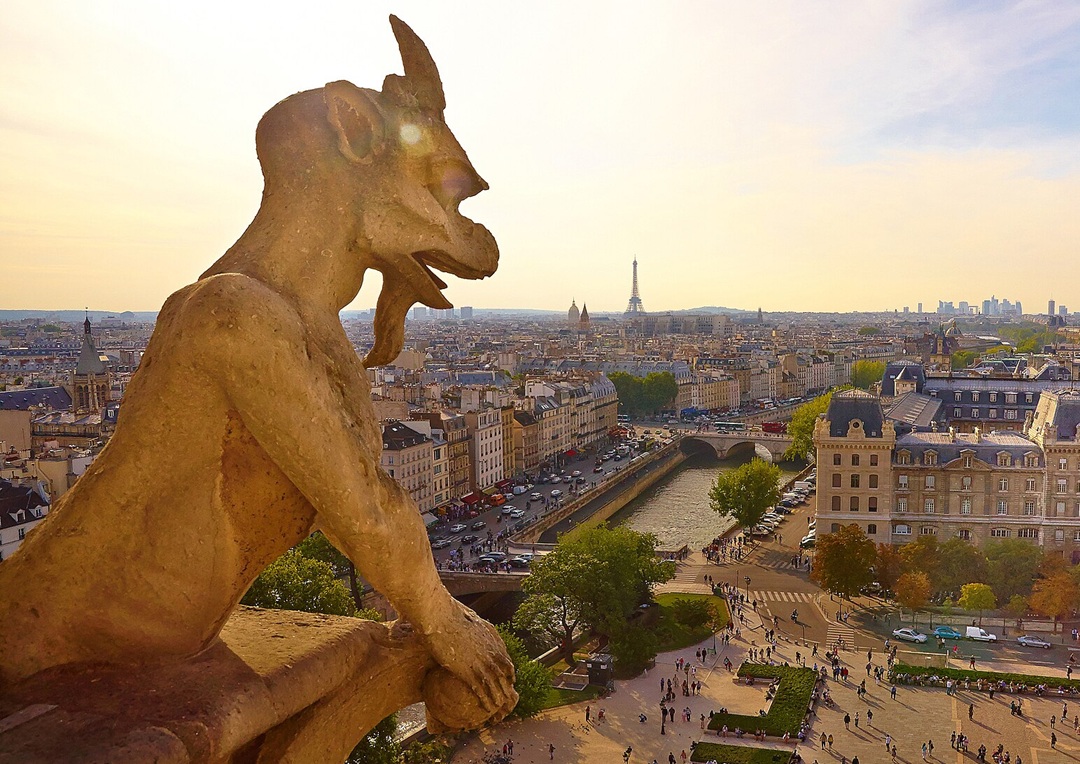
Why This Island Matters and Its Historical Backdrop
Ile de la Cite stands as the original nucleus from which Paris grew across the Seine. During the Middle Ages, this modest island served as the dual epicenter of French royal authority and spiritual devotion. Sovereign rulers governed from the sprawling Palais de la Cite, while master masons pushed gothic architecture to revolutionary heights just down the cobblestones at Notre-Dame Cathedral. In the thirteenth century, King Louis the Ninth transformed the island into a reliquary of Christendom by constructing Sainte-Chapelle to house the Crown of Thorns. Later, the royal palace changed into a fearsome administrative hub and judicial fortress known as the Conciergerie. During the French Revolution, its grand vaulted chambers were repurposed into the antechamber to the guillotine, holding hundreds of doomed nobles and Queen Marie Antoinette. Understanding these shifting layers of faith, monarchy, and radical upheaval turns every bridge crossing and stone facade into an evocative journey through French history.