










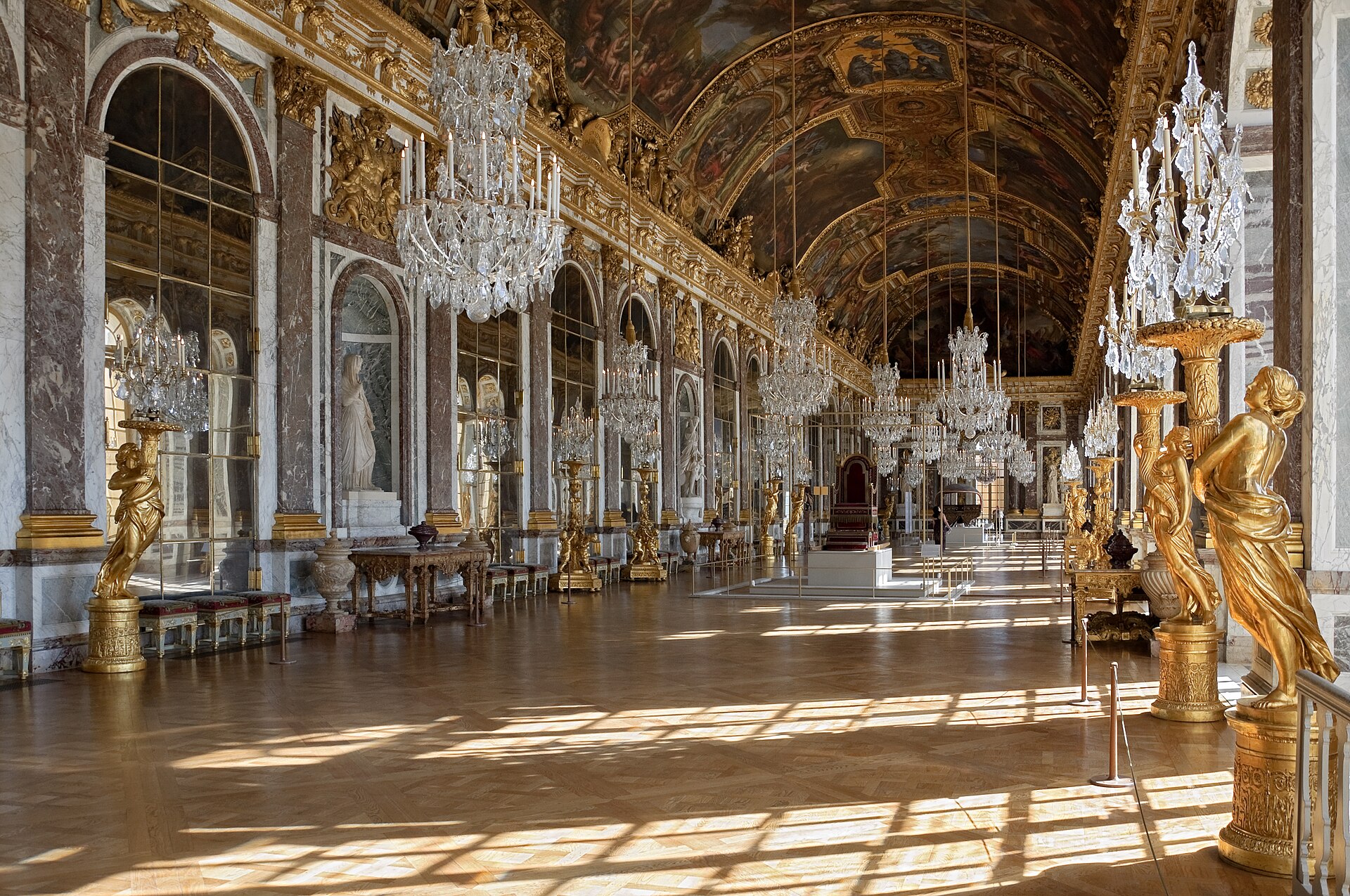
The Apollo Salon: Splendor and Sacrifice in the Sun King's Throne Room

The Apollo Salon: Splendor and Sacrifice in the Sun King's Throne Room

Enter Room 6 of the King's State Apartments, where the Sun King received foreign ambassadors in an overwhelming display of regal authority. Conceived as the ultimate ceremonial sanctuary, the Apollo Salon once dazzled dignitaries with luminous crimson velvet wall hangings and magnificent solid silver furnishings. Though financial ruin and devastating military campaigns eventually forced the crown to melt down its glittering treasures, the room still radiates the theatrical majesty crafted by chief painter Charles Le Brun.

🏛️ Museum Wayfinding King's State Apartments, Room 6.
⏳ Era & Origin
Designed by Charles Le Brun under the reign of Louis XIV.
📍 Exact Gallery / Wing
King's State Apartments, Room 6, Palace of Versailles.
🕒 Suggested Time
10 to 15 minutes.
💡 Insider Tip
Look up to appreciate Charles Le Brun's celestial ceiling composition.
🎧 20-Second Audio Guide Preview

“Step inside Room 6 and look up at the soaring ceiling. Imagine this chamber glowing beneath walls hung with crimson velvet, dominated by an extraordinary throne of solid silver. Charles Le Brun staged absolute monarchy here, until war forced Louis the Fourteenth to melt it all down. Can you sense the vanished grandeur?”

Historical Origin, Artist & Backstory

The Apollo Salon served as the ceremonial heart of royal diplomacy at the Palace of Versailles. Directed by First Painter to the King Charles Le Brun, the chamber was constructed to honor the Greek sun god Apollo, with whom Louis XIV intimately aligned his imperial persona. At its zenith, this spectacular room functioned as the official royal throne room. To emphasize unprecedented wealth and French metallurgical supremacy, the salon was outfitted with massive, solid silver furniture. Candelabras, tables, vases, and an eight-foot-tall silver throne lined the perimeter and dais. However, this unmatched display of opulence proved fleeting. In 1689, facing catastrophic budget deficits during the Nine Years War and severe European conflicts, Louis XIV issued a series of sumptuary edicts requiring the royal silver furniture to be melted down for coinage to finance his armies. Although the gleaming silver was destroyed, the salon retained its status as a vital monument to royal propaganda.

Visual Details, Technique & Hidden Symbolism

Even without its lost silver centerpieces, the Apollo Salon presents a masterclass in Baroque interior design and monarchical symbolism. The walls were traditionally draped in heavy crimson velvet woven with gold thread, providing a dramatic backdrop that heightened the aura of the sovereign. Above, Charles Le Brun directed a tour de force on the vaulted ceiling. The central painting captures Apollo riding his golden sun chariot, drawn by four spirited horses and accompanied by the allegorical figures of the Four Seasons. Each corner and stucco relief reinforces this solar iconography, connecting the daily cycle of sunrise and sunset to the enduring, benevolent power of the French crown. Gilded moldings, richly sculpted stucco figures, and classical friezes frame the narrative scenes, creating an illusion of boundless heavenly space. Every brushstroke and ornamental relief was calculated to convince visiting dignitaries that Louis XIV held sway over both the earthly kingdom and celestial order.

Where to Stand & How to Experience It On-Site

To fully appreciate the Apollo Salon, locate Room 6 within the sequence of the King's State Apartments, situated directly after the Mercury Salon and preceding the War Room. Position yourself near the center of the parquet floor and pause before approaching the rear wall where the grand throne platform once stood. Look toward the eastern orientation of the ceiling to follow the trajectory of Apollo's chariot as it sweeps across the painted sky. The ambient light entering through the large windows facing the palace gardens illuminates the fine details in the gilded cornices and Le Brun's rich color palette. Take time to imagine the sheer weight and blinding reflection of the lost silver pieces that once filled the room, contrasted against the deep crimson velvet. Moving slowly toward the exit into the War Room offers a sweeping angle that demonstrates how court architects carefully framed sightlines to make the seated monarch appear divine.

Paris Smart Guide

Ready to Explore Paris?

Download the Paris Smart Guide now and transform your travel experience

✨ Explore All App Features

Frequently Asked Questions

What was the primary purpose of the Apollo Salon?

The Apollo Salon served as the formal Throne Room in the King's State Apartments, where Louis XIV received visiting ambassadors and held grand evening assemblies.

Why was the solid silver furniture in the Apollo Salon melted down?

In 1689, Louis XIV melted down the royal silver furniture, including the massive throne, to mint coins and finance devastating European military campaigns during the Nine Years War.

Who designed the decoration of the Apollo Salon?

Chief court painter Charles Le Brun oversaw the decorative program, designing the thematic scheme, sculpted stucco elements, and the central ceiling fresco of Apollo in his chariot.

Where is the Apollo Salon located inside the Palace of Versailles?

The salon is located on the first floor within the King's State Apartments, designated as Room 6 along the ceremonial visitor route.

🏛️ Palace of Versailles - More Points of Interest Nearby

Paris Smart Guide
★★★★★ 4.8 • FREE APP • OFFLINE GPS
Hear Paris's Hidden Stories
Your Personal Audio Guide • 10 Languages
🎧 Download the Versailles Audio Tour