










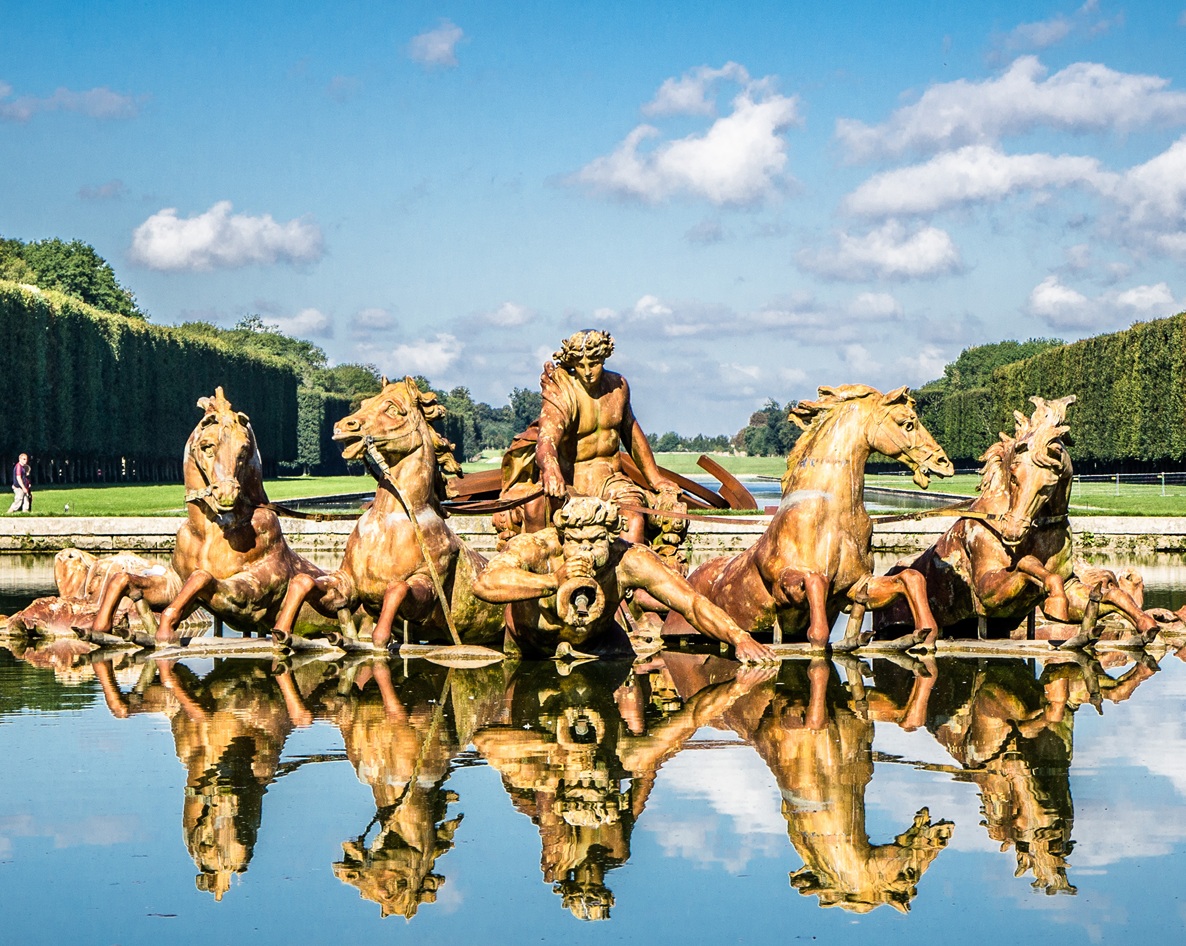
Historical Origin, Artist and Backstory
The Apollo Fountain, or Bassin d'Apollon, was crafted between 1668 and 1671 by the celebrated sculptor Jean-Baptiste Tuby, working from drawings by court painter Charles Le Brun. Tuby, an Italian-born artist naturalized in France, cast the immense group in lead at the Gobelins manufactory before it was transported to Versailles and gilded. The fountain replaced the earlier Pond of the Swans, built during the reign of Louis XIII. Louis XIV sought a centerpiece that would serve as the climactic punctuation mark along the grand east-west axis designed by landscape architect Andre Le Notre. By commissioning a breathtaking tableau of Apollo, patron god of the arts and solar deity, Louis XIV solidified his personal mythological association with cosmic supremacy. The work announced Versailles not merely as an idyllic country retreat, but as the symbolic center of the civilized universe, where every rising sun served as an allegory for the sovereign's daily labor and vigilance over the kingdom of France.