










Avenue Winston Churchill: The Monumental Exhibition Axis

Avenue Winston Churchill: The Monumental Exhibition Axis

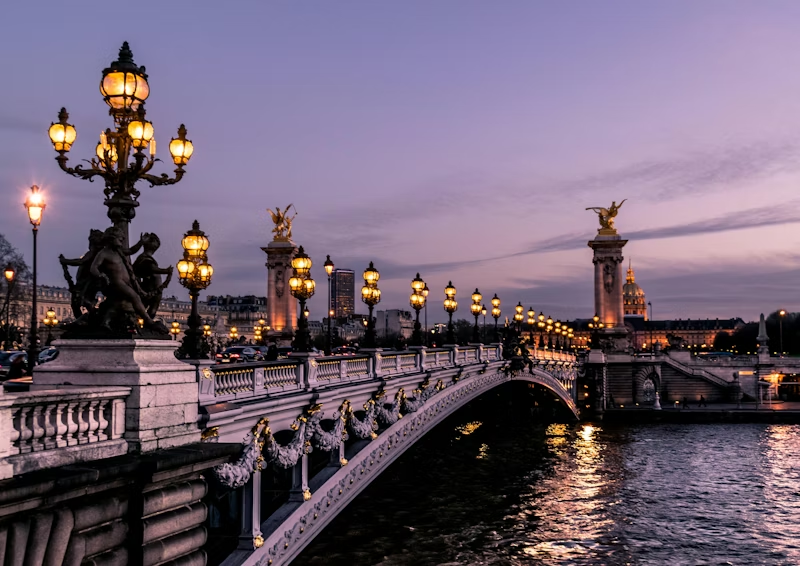
Stand in the wide corridor of Avenue Winston Churchill and take in one of the most calculated urban vistas in Paris. Carved out for the 1900 Universal Exhibition, this majestic thoroughfare frames an unobstructed line of sight. Flanked by the palatial facades of the Grand Palais and Petit Palais, the avenue draws your gaze directly across the river toward the golden dome of the Invalides, capturing the sheer ambition of Belle Epoque urban design.

⏳ Era & Origin
1900 Universal Exposition urban plan, originally named Avenue Nicolas II.
📍 Location & Transit
Between Grand Palais and Petit Palais, 8th Arrondissement, Metro Champs-Elysees Clemenceau.
🕒 Suggested Time
10 to 15 minutes.
💡 Insider Tip
Look south along the roadway center for the aligned Invalides dome.
🎧 20-Second Audio Guide Preview

“Stand right between the two grand palaces on Avenue Winston Churchill. Look south toward the river. Notice how the stone facades frame an unobstructed line straight across the bridge to the shimmering dome of the Invalides. Why was an entire city block obliterated just to create this single view?”

🗺️ Exact Landmark GPS Location
48.86600, 2.31350
📍 Eiffel & Champs-Élysées
Walking Directions

Historical Origin, Artist and Backstory

Avenue Winston Churchill was born out of an audacious master plan for the 1900 Universal Exhibition. To accommodate the grand event, city planners made the radical choice to demolish the aging Palais de l'Industrie, an enormous exhibition hall built for the 1855 world fair. In its place, French urbanists carved a sweeping new boulevard out of the city fabric. Originally christened Avenue Nicolas II to celebrate the Franco-Russian Alliance, the street served as the vital overland link between the Champs-Elysees and the left bank. Following the Second World War, Paris authorities renamed the avenue in honor of British Prime Minister Winston Churchill, celebrating his leadership and wartime alliance with France. The street was never intended merely as a transport artery. Instead, it was conceived as an open-air ceremonial stage that bridged French history with a forward-looking architectural showcase, forever transforming how the 8th Arrondissement connects across the Seine.

Visual Details, Technique and Hidden Symbolism

The layout of Avenue Winston Churchill relies on the classical principles of French monumental perspective. Rather than building towering structures that blocked the skyline, designers precisely calibrated the width of the roadway to create a breathtaking optical corridor. When looking south from the Champs-Elysees, the avenue creates a visual frame formed by the monumental stone colonnades of the Grand Palais on the right and the curved, ornate portal of the Petit Palais on the left. The eye is naturally pulled downward along the smooth pavement directly across the low arch of Pont Alexandre III, culminating squarely at the gleaming gilded dome of the Hotel des Invalides in the distance. Every lamp post, tree line, and balustrade along this strip was regulated to prevent any visual obstruction. This architectural symmetry symbolized France as a beacon of universal culture, deliberately tying Napoleon's resting place to the newly minted palaces of the modern republic.

Where to Stand and How to Experience It On-Site

To fully appreciate this urban masterpiece, begin your walk at the northern edge where Avenue Winston Churchill meets Avenue des Champs-Elysees, right beside the statue of Winston Churchill. Pause in the center of the pedestrian promenade and look directly south. You will see the Grand Palais and Petit Palais facing each other in perfect architectural harmony. Walk slowly toward the Seine, noting the shifting reflections in the glass roofs above you and the intricate bronze details on the lampposts lining the curb. As you approach the bridgehead, turn around to admire the dramatic contrast between the historicist Beaux-Arts stone facades and the modern street life. Visiting during the late afternoon provides the most dramatic experience, as the setting sun hits the gilded statues of Pont Alexandre III and sets the Invalides dome ablaze in warm golden light, illustrating exactly why Belle Epoque designers planned this precise perspective.

Paris Smart Guide

Ready to Explore Paris?

Download the Paris Smart Guide now and transform your travel experience

✨ Explore All App Features

Frequently Asked Questions

Why was Avenue Winston Churchill originally built?

The avenue was carved into the urban landscape for the 1900 Universal Exhibition to create an uninterrupted monumental axis connecting the Champs-Elysees to the Invalides.

What was the original name of Avenue Winston Churchill?

It was originally named Avenue Nicolas II in honor of the Russian Tsar who laid the foundation stone for the neighboring Pont Alexandre III in 1896.

Which famous buildings flank Avenue Winston Churchill?

The avenue is framed on the west by the Grand Palais and on the east by the Petit Palais, both built simultaneously for the 1900 world fair.

What is the best viewpoint along Avenue Winston Churchill?

The best viewpoint is at the center of the avenue looking south toward the Seine, where the road frames the Pont Alexandre III and the Invalides dome.

🏛️ Eiffel & Champs-Élysées - More Points of Interest Nearby

Paris Smart Guide
★★★★★ 4.8 • FREE APP • OFFLINE GPS
Hear Paris's Hidden Stories
Your Personal Audio Guide • 10 Languages
🎧 Get the Paris Audio Tour App