










The Bloody Week: Shadows of the 1871 Paris Commune in Montmartre Cemetery

The Bloody Week: Shadows of the 1871 Paris Commune in Montmartre Cemetery

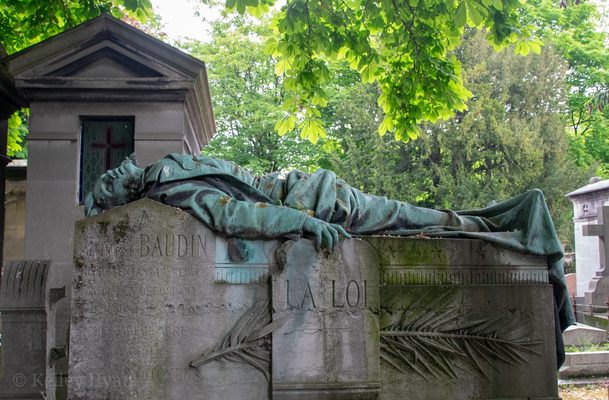
Beneath the leafy canopy and stone family vaults of Montmartre Cemetery lies a chilling layer of nineteenth-century French history. In May 1871, during the cataclysmic climax of the Paris Commune known as the Bloody Week, the hilltop turned into an open slaughterhouse. Government troops executed thousands without trial, hastily shoveling victims into colossal unmarked trenches. Standing here today reveals a profound, haunting contrast between tranquil Parisian romanticism and the violent suppression of a revolutionary dream.

⏳ Era & Origin
May 1871 during the fall of the Paris Commune
📍 Location & Transit
Montmartre Cemetery, 20 Avenue Rachel, beneath the Rue Caulaincourt bridge
🕒 Suggested Time
15 to 20 minutes
💡 Insider Tip
Notice the sunken quarry floor where massive trenches were quickly filled
🎧 20-Second Audio Guide Preview

“Stand beneath the cast iron bridge that spans this sunken cemetery. Look across the weathered limestone tombs around you. In late May 1871, this quiet hollow became a site of brutal terror. Thousands of executed Commune fighters were dumped into hastily dug trenches right under your feet. Who still remembers their silenced names?”

🗺️ Exact Landmark GPS Location
48.88590, 2.33151
📍 Montmartre
Walking Directions

Historical Origin, Artist & Backstory

In March 1871, working-class Parisians rebelled against the conservative national government, establishing the radical, self-governing Paris Commune. Montmartre was the symbolic cradle of this uprising, as local guardsmen had fiercely refused to surrender their cannons on the hilltop. Two months later, the national army loyal to Adolphe Thiers breached the city ramparts. What followed between May 21 and May 28 became known as La Semaine Sanglante, or the Bloody Week. Montmartre saw desperate barricade fighting, but the resistance collapsed under overwhelming military firepower. Soldiers swept through the neighborhood, rounding up anyone suspected of supporting the Commune. Without hearings or judicial trials, thousands of men, women, and even children were summarily shot against walls and street corners. To conceal the staggering scale of the slaughter and prevent disease, army authorities requisitioned the sunken grounds of Montmartre Cemetery, burying thousands of corpses in gigantic pits before the eyes of terrified local onlookers.

Visual Details, Technique & Hidden Symbolism

Montmartre Cemetery occupies a former gypsum quarry, sitting deep below street level in a natural depression. This unique topography made it an ideal location for the military to carry out clandestine, efficient disposals. During the final days of May 1871, carts loaded with bodies rumbled down the steep access ramps day and night. Witnesses recorded that lime was poured frantically over rows of corpses laid inside gaping trenches, which were subsequently leveled to erase physical evidence of the executions. Unlike Pere Lachaise Cemetery, which preserves the famous Communards Wall with its commemorative plaques and annual tributes, the mass graves of Montmartre Cemetery remain largely anonymous. The ground was later reclaimed for conventional family plots and ornate funerary monuments, effectively burying the massacre beneath layers of respectable bourgeois marble. The absence of an official monument over the exact trenches serves as a poignant reminder of how official state memory deliberately sought to erase revolutionary defeat.

Where to Stand & How to Experience It On-Site

To comprehend the gravity of these events, enter the cemetery via Avenue Rachel and walk past the administrative gatehouse. Advance toward the center of the grounds and pause directly beneath the imposing steel arches of the Rue Caulaincourt viaduct. From this vantage point, look across the crowded avenues of tombs. The sheer density of ornate sepulchers conceals the raw earth where anonymous trench graves were dug under martial law. Stand quietly and observe the dramatic difference in elevation between the surrounding residential streets and the low cemetery floor. Picture the chaos of late May 1871, when rifle smoke filled this very basin and the smell of quicklime hung heavy in the spring air. Visiting in the quiet early morning hours allows you to escape tourist chatter and contemplate the grim fate of the forgotten Communards who fought and died across the surrounding cobblestones of the 18th arrondissement.

Paris Smart Guide

Ready to Explore Paris?

Download the Paris Smart Guide now and transform your travel experience

✨ Explore All App Features

Frequently Asked Questions

What exactly was the Bloody Week in Montmartre?

The Bloody Week, or Semaine Sanglante, occurred between May 21 and May 28, 1871. It marked the violent reconquest of Paris by the French national army, resulting in the summary execution of thousands of Paris Commune supporters throughout the city, particularly across Montmartre.

Where are the mass graves located inside Montmartre Cemetery?

The mass graves were dug across the sunken quarry floor of Montmartre Cemetery. Because the trenches were quickly leveled and later subdivided into conventional private burial plots, no single tombstone marks the precise perimeter of the 1871 trenches today.

Why was Montmartre so central to the Paris Commune?

Montmartre was the birthplace of the Paris Commune. The insurrection was sparked on March 18, 1871, when local working-class citizens and National Guardsmen refused to surrender the defensive cannons stationed atop the Montmartre butte to government forces.

Is there a monument dedicated to the Communards in Montmartre Cemetery?

Unlike Pere Lachaise Cemetery, which features the famous Communards Wall, Montmartre Cemetery lacks a prominent centralized monument to the victims. Visitors reflect upon the history throughout the cemetery grounds and near the former quarry slopes.

🏛️ Montmartre - More Points of Interest Nearby

Paris Smart Guide
★★★★★ 4.8 • FREE APP • OFFLINE GPS
Hear Paris's Hidden Stories
Your Personal Audio Guide • 10 Languages
🎧 Download the Audio Tour