Walk the Ghostly Streets of Paris's Lost Generation
Step back to 1920s Paris, a vibrant city that ignited the spirits of American expatriates seeking freedom and inspiration. In the heart of the Latin Quarter and Saint-Germain-des-Prés, literary giants like Ernest Hemingway, F. Scott Fitzgerald, and Gertrude Stein found their voice, transforming bohemian cafes and quiet streets into the backdrop for an era of unprecedented artistic creation. Follow their footsteps and uncover the hidden stories that shaped modern literature.
🎧 20-Second Audio Guide Preview
“Stand before the ancient Abbey of Saint-Germain-des-Prés. Imagine the 1920s jazz echoing against its 6th-century walls. Look closely at the spot where Sylvia Beach ran Shakespeare & Company, publishing banned masterpieces. Then, step into Les Deux Magots, where Hemingway wrote his dispatches. Feel the pulse of the Lost Generation. What secrets do these Parisian streets still whisper?”
🗺️ Interactive Walking Route Map
Tap any numbered stop pin to preview its location & walking directions
The Parisian Salons and Cafés: Where Legends Were Forged
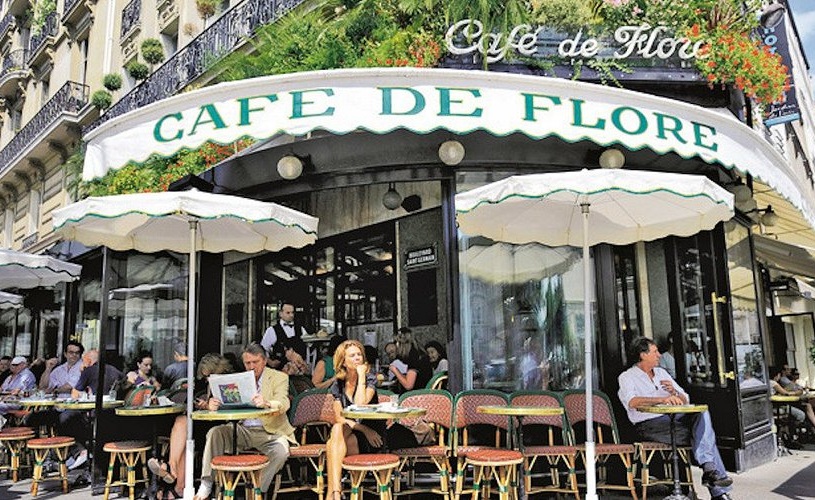
Delve into the vibrant intellectual landscape of 1920s Paris, where ordinary spaces transformed into legendary meeting points for the Lost Generation. At 12 Rue de l'Odéon, Sylvia Beach's original Shakespeare & Company was more than a bookstore; it was a sanctuary for broke writers, famously publishing James Joyce's 'Ulysses' when others wouldn't. Just steps away, iconic cafés like Les Deux Magots and Café de Flore buzzed with creative energy. Hemingway penned dispatches at Les Deux Magots, while Café de Flore became the birthplace of Existentialist thought, a stronghold for Sartre and de Beauvoir. Meanwhile, Gertrude Stein's salon at 27 Rue de Fleurus, adorned with unappreciated Picassos and Matisses, served as the ultimate intellectual crucible, mentoring and shaping the literary voices that would define an era, often with brutal honesty.
Hemingway's Struggle: From Poverty to Literary Promise
Ernest Hemingway’s early Paris years in the Latin Quarter were marked by profound poverty, a period he would later romanticize after achieving fame. From 1922-1923, he resided in a tiny, modest apartment at 74 Rue du Cardinal Lemoine, a stark contrast to his later success. Despite the financial hardship, this was a time of immense productivity, fueled by dedication and a fierce ambition. His memoir, 'A Moveable Feast,' vividly recounts these struggles, including his longing glances into the opulent Brasserie Lipp, a place of expensive Alsatian fare that a starving Hemingway vowed to afford one day. The legend even claims he secretly hunted pigeons in the Luxembourg Gardens to feed his family, a testament to the desperate lengths he went to survive and create. This era forged the raw, honest voice that defined his masterpieces.
Ancient Legacies: From Roman Fields to Revolutionary Boulevards
Before it became the bohemian heart of the Jazz Age, the Latin Quarter’s foundations stretched back through centuries of Parisian history. The venerable Abbey of Saint-Germain-des-Prés, founded in 558 AD, stands as a stoic witness, its ancient Romanesque bell tower a constant backdrop to the ever-evolving neighborhood. Originally built in fields outside the Roman city walls, this oldest church in Paris grounds the district in its profound past, providing a striking contrast to the modernist literary movements that later flourished around it. Just a short walk away, the Danton Crossroads on Boulevard Saint-Germain echoes with a more violent history. Marked by the imposing statue of Revolutionary leader Georges Danton, this site recalls the birth of the guillotine, its bloody past a dramatic juxtaposition to the cheap, cold-water flats where 20th-century American writers absorbed Paris’s multifaceted heritage for their groundbreaking novels.
Ready to Explore Paris?
Download the Paris Smart Guide now and transform your travel experience
Conclude the tour where a starving Hemingway claimed he secretly hunted park pigeons for dinner.
Frequently Asked Questions
What is the 'Lost Generation' and why is it associated with Paris?
The 'Lost Generation' refers to the American expatriate writers, artists, and musicians who came of age during World War I and established their artistic careers in post-war Paris during the 1920s. They were disillusioned by American society (especially Prohibition) and sought creative freedom and a lower cost of living in Paris, particularly in the Latin Quarter and Saint-Germain-des-Prés.
Which famous literary figures are part of this tour?
This tour focuses on key figures like Ernest Hemingway, Sylvia Beach (of Shakespeare & Company), James Joyce, Gertrude Stein, F. Scott Fitzgerald, Jean-Paul Sartre, and Simone de Beauvoir. You’ll walk in their footsteps and discover the places where they lived, wrote, and debated.
How does the audio guide enhance my exploration of the Latin Quarter?
Our audio guide uses immersive storytelling to transport you back to the Jazz Age. As you stand at each historical site, you'll hear fascinating anecdotes, historical context, and literary insights, bringing Hemingway's first flat, Sylvia Beach's bookstore, and the iconic cafes to vivid life. It’s like having a historian whisper secrets in your ear.
Is the Latin Quarter still a good place for writers today?
While the specific bohemian atmosphere of the 1920s has evolved, the Latin Quarter and Saint-Germain-des-Prés remain culturally rich districts. Its historic cafes, independent bookstores, and academic institutions continue to inspire. Many writers and artists still find solace and inspiration in its unique ambiance and enduring literary legacy.